Winter Car Prep in Chicago: Your 2026 Survival Guide
Winter car prep in Chicago, step by step: battery, tires, fluids, wipers, road salt, a storm-morning routine, an emergency kit, and a calendar.
- October 14, 2026
- Carrectly Auto Care
- 14 min read
Picture a January morning in Avondale. It is 4°F, the car has sat on the street all night, and you have twenty minutes to get to work. You turn the key and hear one click. Then nothing. The battery was already weak in October. Nobody tested it, so it chose the coldest morning of the year to quit.
That is how most winter breakdowns go. Winter car prep in Chicago is not a shopping list of sprays and gadgets. It is a short set of checks aimed at the three things our winter does to a car: cold that drains batteries, snow that hides the road and blocks your view, and road salt that eats metal for five months straight.
Below is the order we work in at our West Town shop. After the five steps you will find what we do with your car, a morning-after-a-storm routine, and a month by month calendar.
Key takeaways
- Test the battery before the first hard freeze, not after the first no-start
- Pick tires for the cold, keep the tread deep, and check the pressure every month
- Use winter washer fluid, a tested coolant mix, and keep the tank at least half full
- Rinse road salt off the underbody during the season, not just in spring
- After a storm, clear the tailpipe and the whole car before you drive
How do you prepare a car for a Chicago winter?
Test the battery, put on winter tires or check all-season tread and pressure, and have the coolant freeze point tested. Fill up with winter washer fluid, replace streaky wipers, and make sure the heater and defroster work. Keep the tank at least half full, carry a winter kit, and rinse road salt off the underbody until spring.
What a Chicago winter does to your car
Almost every winter problem we see from December to March comes back to one of three things. Know which one you are fighting, and you know what to check.
Cold. A battery makes less power in the cold, and a cold engine is harder to turn over. So a battery that was fine in September can fail on the first sub-zero morning. Tires lose pressure as the air cools, and summer washer fluid freezes on the glass.
Snow. O'Hare averages more than three feet of snow a season. Snow hides lane lines, packs into the tailpipe of a parked car, and buries street-parked cars when the plows go by. Plows also throw snow clouds that can cut your view to zero.
Salt. Road salt keeps traffic moving, and every car on the road ends up wearing it. Mixed with slush, it gets into seams, brake lines, and the underbody. It keeps working on bare metal long after the snow melts.
36.7 inches of snow and a 16.5°F January low. An average season at O'Hare under the official 1981 to 2010 normals. Most of that snow falls from December through February.
Step 1: Test the battery before the first freeze
A dead battery is the most common winter no-start we see. Cold slows the chemistry that makes power, and cold oil makes the engine harder to crank. A weak battery can hide all fall, then quit on the first really cold day.
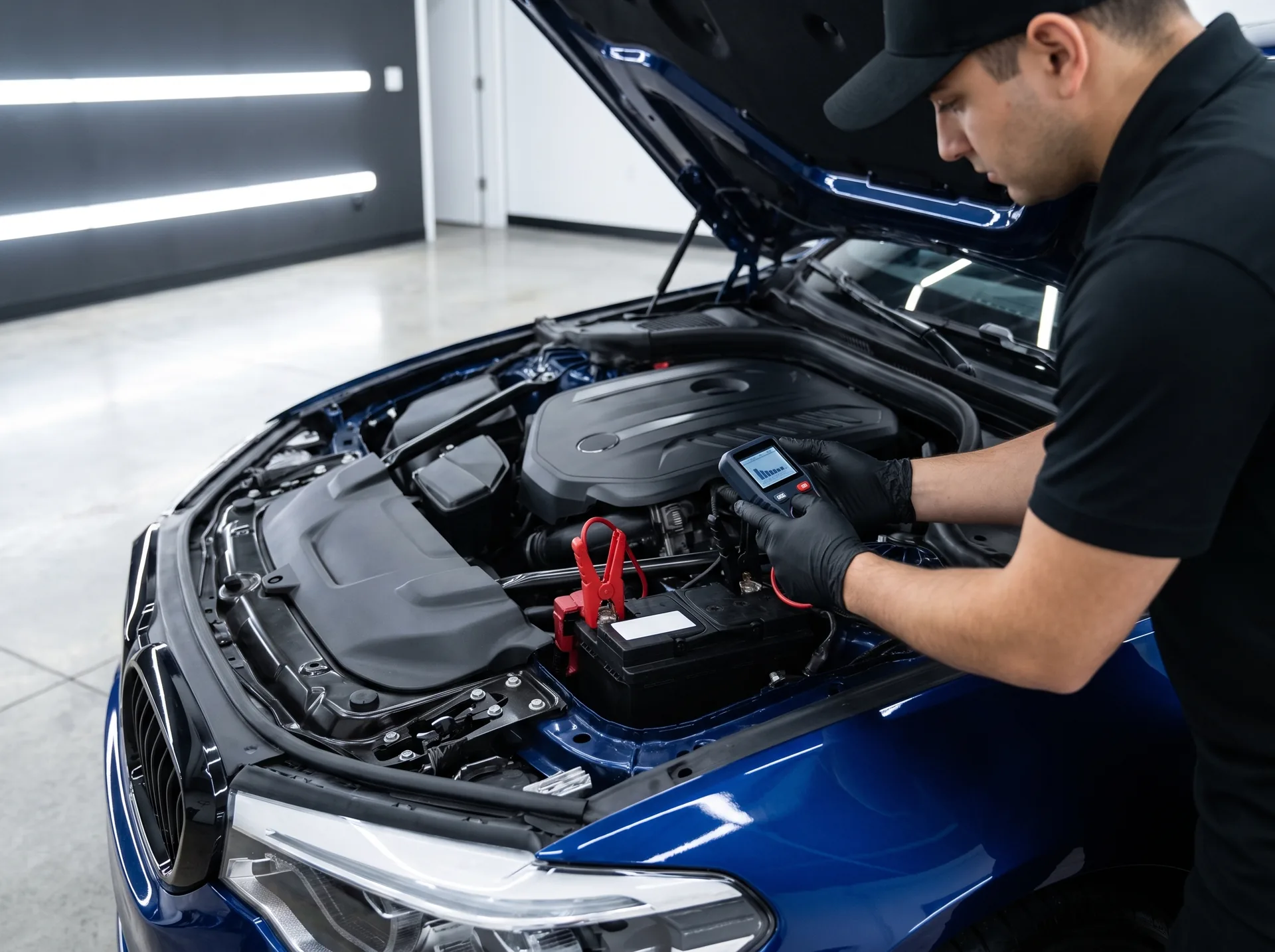
Get a load test, not just a voltage reading. A voltmeter shows the charge. A load test shows whether the battery can still deliver its cold cranking amps, the rating for how much power it gives at 0°F. Our battery and charging system service starts with a full charging-system test, so a tired alternator does not get blamed on a new battery.
Watch for the warning signs. A slow, labored crank. Dim headlights at startup. A battery light on the dash. White or green crust on the terminals. If your battery is a few years old and shows any of these, replace it in October, not in a parking lot in January.
Drive an EV or a plug-in hybrid? Preheat the cabin while the car is still plugged in. The U.S. Department of Energy says this can extend your range, because the heat comes from the wall instead of the battery.
Step 2: Tires that grip in the cold
Tires are the only part of the car that touches the road, and in a Chicago winter that road is often slush over ice. You have two good options: dedicated winter tires, or all-season tires with plenty of tread.
Winter tires. They use a softer rubber that stays flexible in the cold, and a tread built to bite into snow. Look for the three-peak mountain snowflake symbol on the sidewall. It marks tires that passed a severe snow traction test. Fit all four, never just two, so the front and rear grip the same way.
All-season tires. Plenty of Chicago drivers get through winter on all-seasons. That works if the tread is deep. Try the penny test: put a penny in the groove with Lincoln's head down. If you can see all of his head, the tread is too shallow for snow.
Pressure drops with the temperature. The Department of Energy notes that tire pressure falls in the cold, so tires set in October will be low by January. Check them once a month, in the morning before you drive. Use the number on the door jamb, not the one on the sidewall.
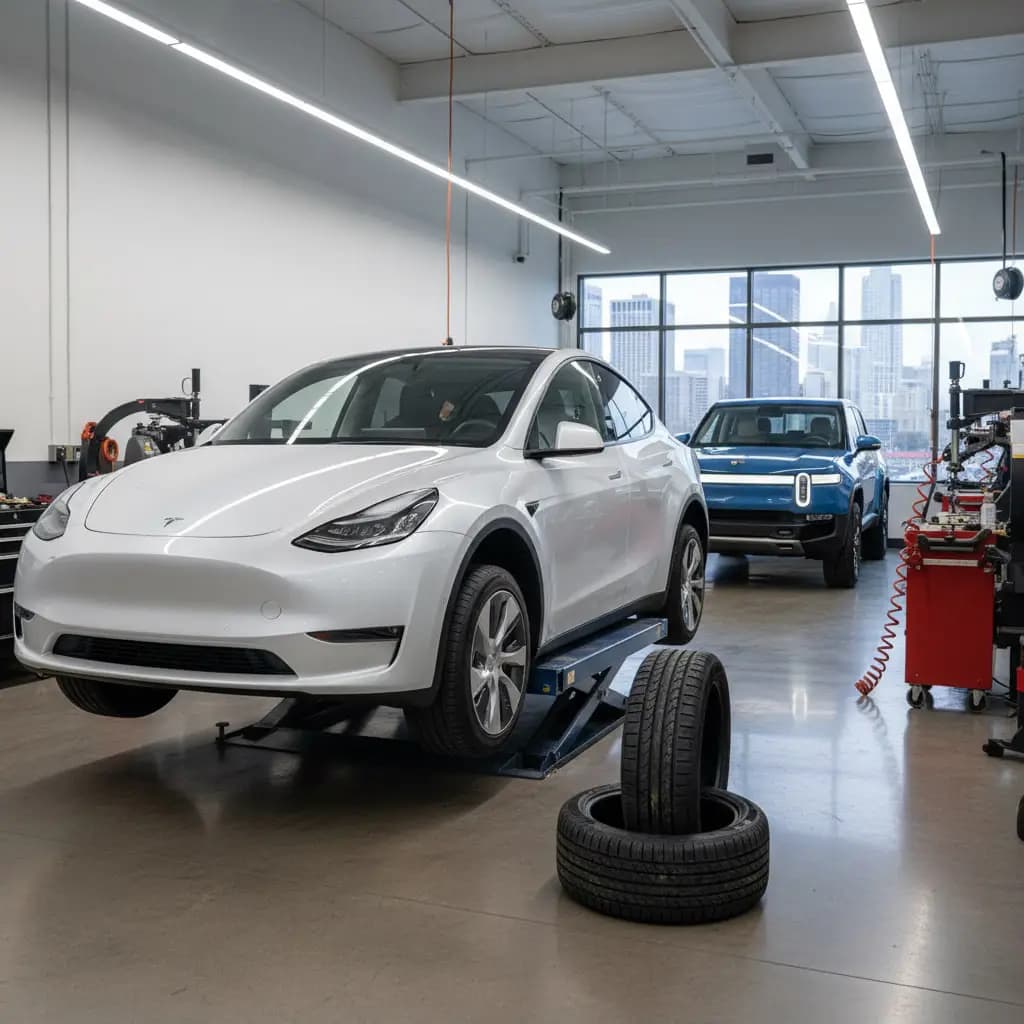
We mount, balance, and swap seasonal sets as part of our tires and alignment service. Your off-season set can wait for spring in our climate-controlled wheel and tire storage instead of your hallway.
Step 3: Fluids that will not freeze
Coolant. Coolant, also called antifreeze, keeps the water in your engine from freezing and cracking it. Most cars run a mix of about half coolant and half water. If someone topped it off with plain water, the freeze point goes up. Our cooling system service tests the freeze point and pH, then pressure tests the whole loop. A heater that never gets hot is a sign to have the thermostat checked too.
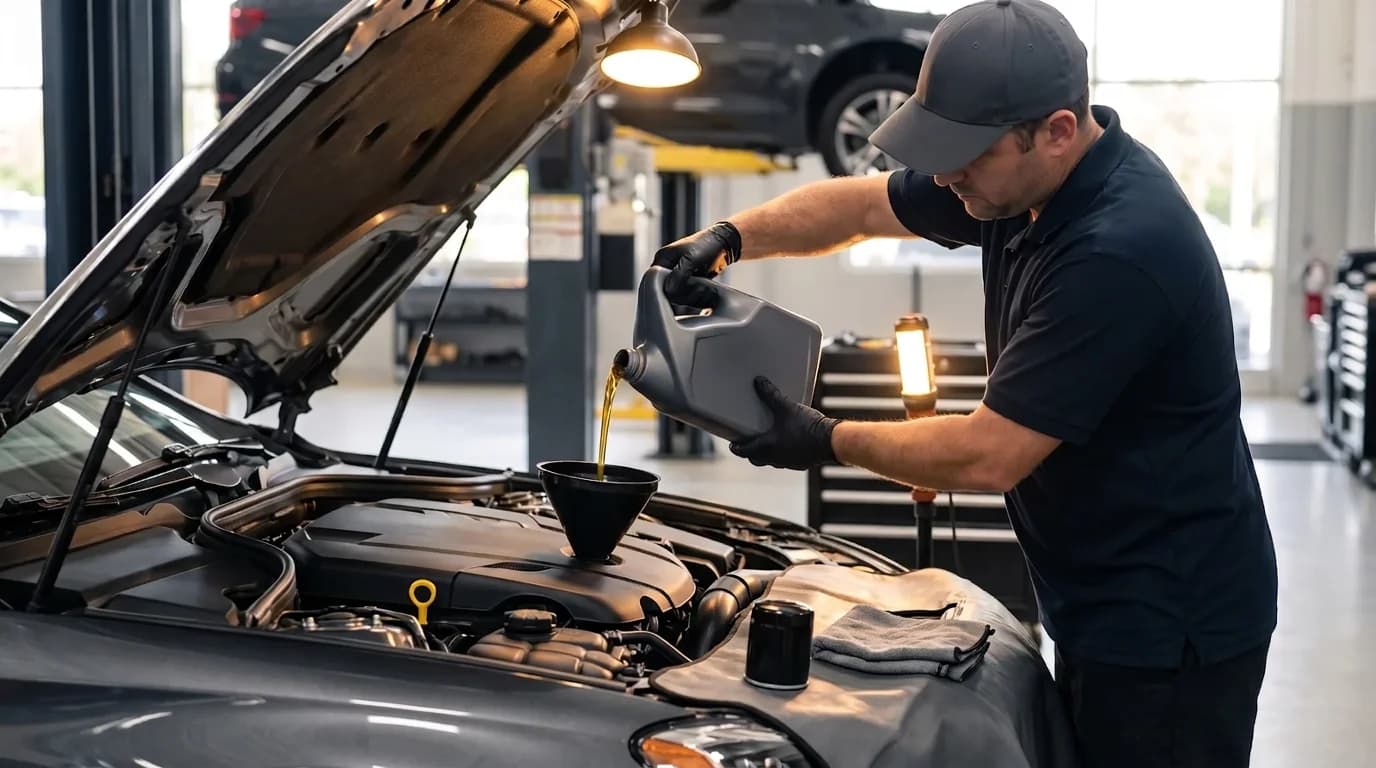
Engine oil. Use the grade in your owner's manual. Thinner oil flows faster on a cold start, which is why many newer cars call for a low first number like 0W. If your oil change is due before spring, do it now so the engine starts the season clean.
Washer fluid. Summer fluid is mostly water, and it can freeze on the windshield. Switch to a winter blend rated well below zero, and keep a spare jug in the trunk. You will go through it fast behind the salt trucks.
Gas. Keep the tank at least half full. Ready Illinois, the state emergency agency, says this helps keep fuel lines from freezing and adds weight for traction. It also means you can run the heater if you get stuck.
Step 4: See and be seen
In January, most Chicago commutes start in the dark and end in the dark. If you cannot see out, nothing else on this list matters.
Wipers. Blades that streak or chatter now will be worse on ice. Replace them in the fall. Winter blades have a rubber boot that keeps ice from packing into the frame. Before a storm, lift them off the glass so they do not freeze to it.
Heater and defroster. Turn both on full on a cool fall day. If the defroster blows weak or cold air, or the windows fog up and will not clear, get it checked now. You do not want to find out at 6 a.m. on a work day.
Lights. Walk around the car with the lights on and replace any dead bulb. Yellow, cloudy lenses cut how far you can see, and headlight restoration clears them.
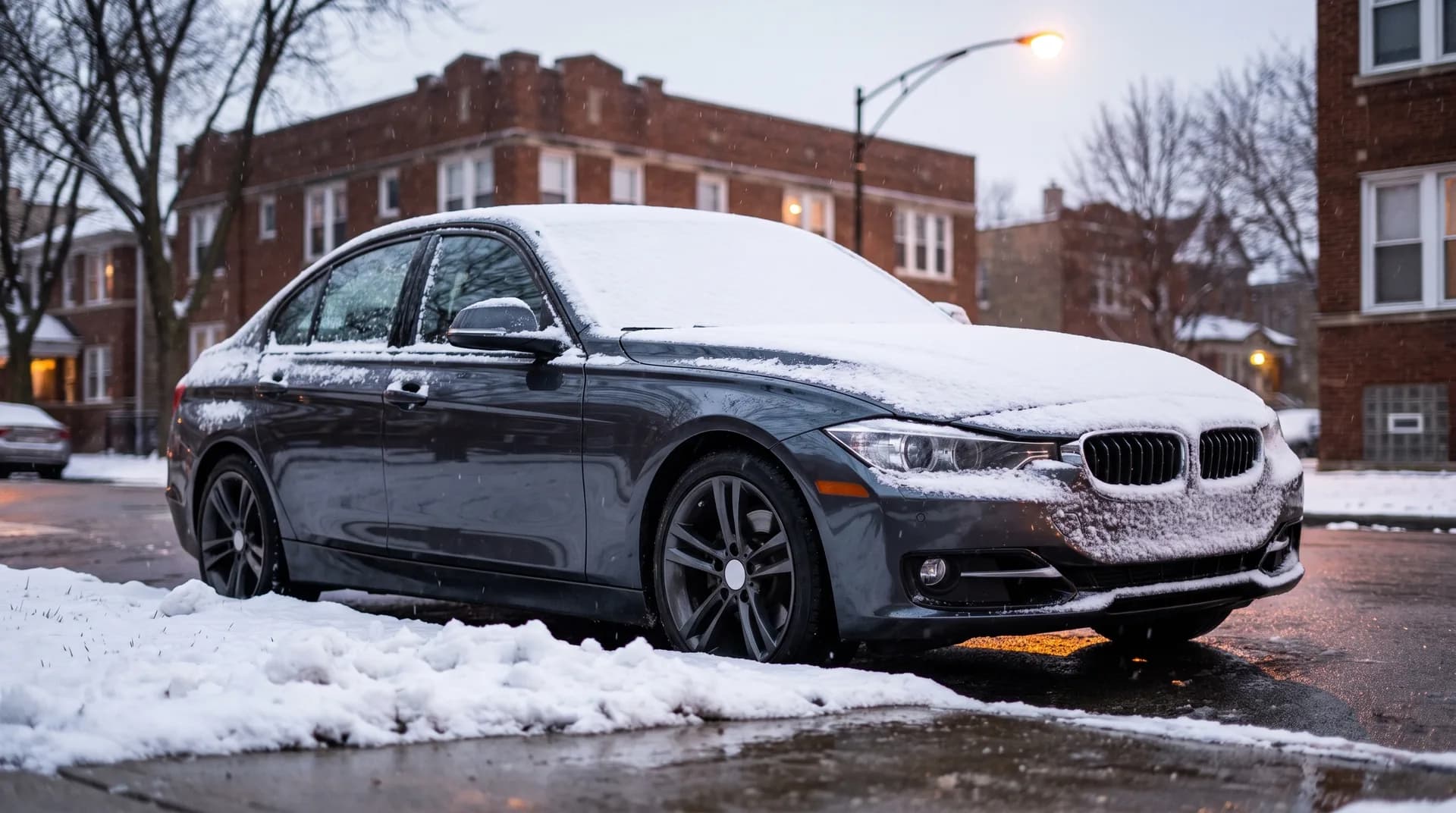
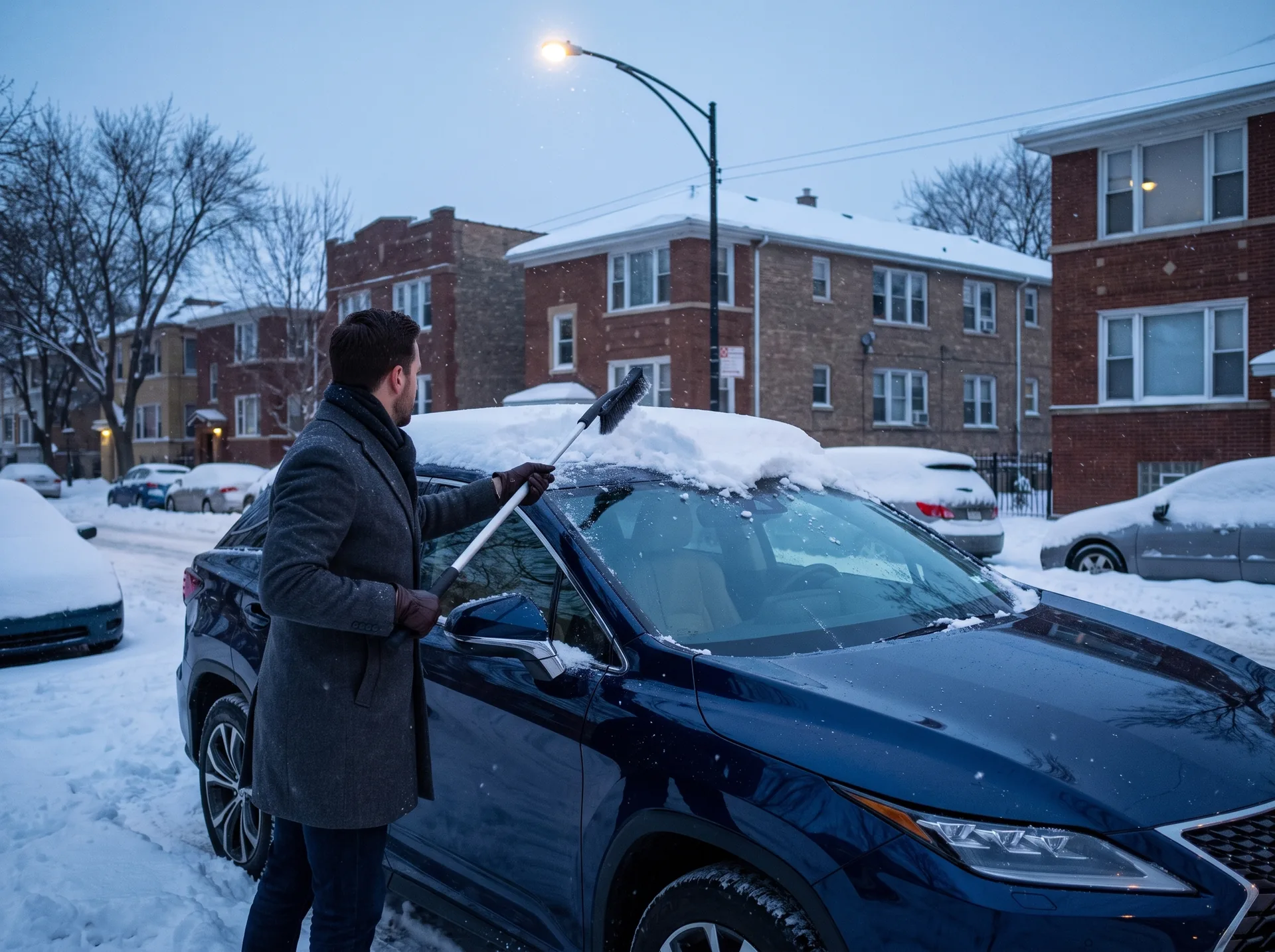
Clear the whole car. IDOT is direct about it: remove snow and ice from your vehicle before driving, because it is the law. That means the roof, hood, lights, and every window, not a small hole in the windshield. Roof snow slides onto the glass at the first stop, or flies off into the car behind you.
Step 5: Fight the salt all season
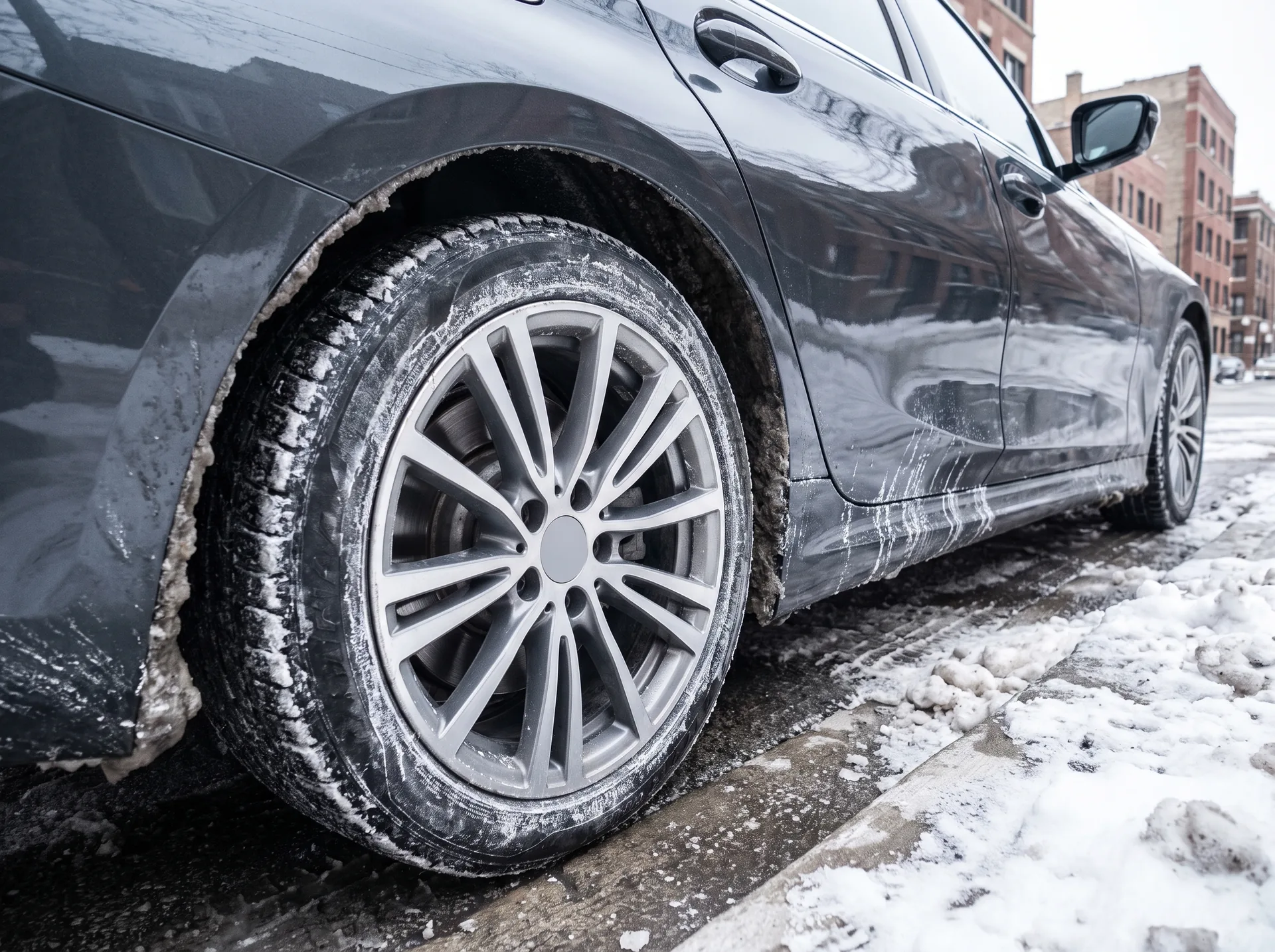
Salt does the most damage where you never look. It packs into the frame rails, the brake lines, the backs of the bumpers, and the inside of the rocker panels. Slush keeps it wet, so it works on bare metal day after day.
Rinse the underbody, not just the paint. A drive-through wash cleans what you see but barely reaches the frame. Our undercarriage power wash pre-soaks the grime, blasts it off with high pressure, and rinses the cleaning agents away. Do one after the worst salt stretches, and always one in spring.
Wash above freezing. Pick a day above 32°F, so water does not freeze in the door locks, seals, and window tracks.
Protect the paint first. A coat of wax or sealant on clean paint, put on before the first snow, gives salt and grime something to sit on besides your clear coat. It also makes each winter wash faster.
Mind the inside. Salty slush from your boots soaks into the carpet and dries into white stains. Rubber floor mats catch it.
Rather have one shop check all of it? Our multi-point inspection covers the battery, tires, fluids, wipers, and lights in one visit. See our multi-point inspection
DIY or shop: what to do yourself
We are a shop, so you might expect us to say hand us everything. We will not. Wipers, washer fluid, tire pressure, and the winter kit are easy at home, and you should do them yourself.
The checks worth handing off are the ones that need a tester or a lift: the battery load test, the coolant freeze point, and the underbody. Those are also the ones that leave you stranded when they fail.
| Winter task | DIY at home | At the shop |
|---|---|---|
| Battery | Read the voltage with a meter and check the date code | Load test, cold cranking amps, and a full charging-system test |
| Tires | Penny test and a monthly pressure check | Mount, balance, torque to spec, TPMS, and seasonal storage |
| Coolant | Check the level in the overflow tank when the engine is cold | Freeze point and pH test, plus a pressure test of the loop |
| Wipers and washer fluid | Easy to do yourself in ten minutes | Checked as part of an inspection |
| Underbody salt | A hose or coin-op wand reaches very little | Car on a lift, pre-soak, and a high-pressure rinse |
| Brakes and suspension | Listen for grinding and notice any pulling | Pads, rotors, lines, and joints checked on a lift |
What we do with your car before winter
Here is what actually happens when you hand us the car. Our concierge picks it up and brings it back almost anywhere in Chicago, or you can drop it at our West Town shop. You choose the date and time.
Battery. Every battery job starts with a full charging-system test: load, state of health, and cold cranking amps. We also test the alternator and starter, and track down parasitic drain if a battery keeps dying overnight. On start-stop cars with AGM batteries, we register the new battery to the car's battery management system. Car already will not start? Our battery jump, test and swap comes to you: a tech jumps and tests the battery on the spot, and swaps it there if it needs replacing.
Tires. We mount and balance your winter set, torque the wheels to spec, and service the TPMS sensors. We check tread depth, wear pattern, sidewalls, and rims while the wheels are off. Your off-season set is inspected, then stored on secure shelving in our climate-controlled facility until spring.
Coolant and heat. We pressure test the cooling loop and test the coolant for freeze point and pH. We flush it only when the fluid says it needs it. If your heater never gets warm, we check the thermostat.
Brakes and everything else. Our multi-point inspection covers the fluids, brakes, tires, battery, belts and hoses, lights, wipers, and dashboard warnings, and ends with a written report we walk you through. A brake inspection measures pad thickness and checks the rotors, calipers, lines, and brake fluid.
Salt and paint. The undercarriage power wash pre-soaks, pressure washes, and rinses the underbody. An exterior detail adds a snow foam pre-soak, a hand wash, a polish, and a coat of wax or sealant. For longer protection, a ceramic coating goes on paint, glass, and wheels after a clay bar decontamination; our 1-year coating is designed to last up to 12 months with proper care. When the salt season ends, an interior detail takes the carpets back from the slush.
The morning after a snowstorm
1. Clear the tailpipe first
Before you start the engine, dig the snow away from the tailpipe. The CDC warns that a blocked tailpipe lets carbon monoxide build up fast inside the car. Never sit in a buried car with the engine running.
2. Clear the whole car
Brush off the roof, hood, trunk, lights, mirrors, and every window. In Illinois it is the law, and roof snow will slide onto your windshield at the first stop.
3. Start it and drive off gently
You do not need a long warm-up. Most carmakers say about 30 seconds is enough, then drive gently for the first few miles. The engine warms up faster moving than idling.
4. Defrost until the glass is fully clear
Run the defroster on high with the A/C button on, which dries the air. Never pour hot water on frozen glass, because the sudden heat can crack it.
5. Check the tire pressure light
A light on a cold morning often means the pressure dropped overnight. Fill the tires to the door jamb number at the first gas station, and have them checked if the light comes back.
6. Give the plows room
Stay well back from snowplows. The driver cannot see close behind, and the snow cloud a plow throws can hide the road. The lane behind a working plow is the safer one.
7. Know where you can park tonight
From December 1 to April 1, parking is banned from 3 to 7 a.m. on 107 miles of main streets, snow or not. Once two inches of snow fall, a second ban covers 500 more miles. Read the signs before you leave the car.
Your Chicago winter car prep calendar
October. Test the battery and the coolant. Replace the wipers and switch to winter washer fluid. Run the heater and defroster. Book your tire swap now, before the first snow sends every driver in the city to a tire shop the same week.
November. Put winter tires on once the cold settles in. Wax or seal the paint. Pack the kit. Find out if your street is on the overnight parking ban route, which starts December 1.
December to February. Check the tire pressure every month. Rinse the underbody after the heavy salt stretches. Keep the tank half full and the washer fluid topped off.
March and April. The overnight ban ends April 1. Give the car a full wash with an underbody rinse to get the season's salt off. Swap back to your warm-weather tires, and have the brakes and suspension looked at after a winter of potholes.
Frequently Asked Questions
1. When should I winterize my car in Chicago?
In October or early November, before the first hard freeze and the first snow. Tire shops fill up the week of the first snowfall, so book early. Battery and coolant tests take minutes and catch the most common winter breakdowns.
2. Do I need winter tires in Chicago?
Illinois does not require them, but they help. Winter tires stay soft in the cold and grip snow and slush better than all-season tires. If you stay on all-seasons, keep the tread deep and the pressure right. When you buy winter tires, look for the three-peak mountain snowflake symbol.
3. How long should I warm up my car in winter?
About 30 seconds for most cars, then drive gently. The U.S. Department of Energy notes that most manufacturers recommend this. Long idling wastes fuel and warms the engine more slowly than driving does. Clear the tailpipe before you start the engine.
4. How often should I wash my car in a Chicago winter?
Wash it when salt turns the paint white, and rinse the underbody after the worst salt stretches. Pick a day above freezing so water does not freeze in the locks and seals. Always finish the season with a full wash and an underbody rinse in spring.
5. Is it illegal to drive with snow on my car in Illinois?
Yes. IDOT says removing snow and ice from your vehicle before driving is the law. Clear the roof, hood, lights, and all windows. Snow left on top can slide onto your windshield or fly off and hit the car behind you.
6. What should I keep in my car in winter?
Jumper cables, an ice scraper and brush, a small shovel, sand or cat litter for traction, flares or reflectors, a flashlight, a phone charger, a first-aid kit, blankets, water, and snacks. Keep the gas tank at least half full too.
References
- Winter Snow Parking Restrictions. City of Chicago, Department of Streets and Sanitation, accessed 2026-10-14.
Get your car winter-ready before the first freeze
We test the battery, tires, coolant, wipers, and lights, then bring the car back to you. Concierge pick-up and return almost anywhere in Chicago.
Get a Winter Prep Quote or see what our multi-point inspection covers
- chicago
- winter car prep
- winterize car
- chicago winter driving
- winter tires