
September Sunroof Drain & HVAC Flood Trap in Chicago
Water leaking inside your car? Clogged sunroof drains cause floor flooding & HVAC mold. Book professional drain cleaning & ozone sanitization via concierge!
- September 14, 2026
- Carrectly Auto Care
- 15 min read
By the Senior Shop Foreman at Carrectly Auto Care (3069 W Grand Ave, Chicago, IL)
Summer pollen, pine needles, and dust frequently clog vehicle sunroof drain tubes. When heavy September autumn rains hit Chicago, trapped water overflows into the cabin, soaking carpets, destroying underlying electronics (BCMs), and breeding toxic HVAC mold. Carrectly Auto Care resolves this through pneumatic drain clearing, sub-carpet water extraction, antimicrobial evaporator foaming, and industrial Ozone (O3) sterilization at our W Grand Ave facility, fully serviced via our concierge pickup logistics.
The First Autumn Downpour: Chicago’s Hidden Water Hazard
On our shop floor at 3069 W Grand Ave, we can predict the weather forecast simply by watching the types of vehicles pulled into our diagnostic bays. As August gives way to September, Chicago's weather undergoes a dramatic shift. The hot, dry summer days along Lake Michigan suddenly give way to heavy, violent autumn thunderstorms. Every September, without fail, our phones start ringing with distressed vehicle owners across Lincoln Park, River North, and Wicker Park reporting the exact same nightmare: "I opened my car door this morning after last night’s storm, and there are two inches of standing water in my passenger footwell, and the car smells like a damp basement."
To most car owners, a water leak inside a luxury vehicle feels like a mysterious, random failure. They assume a window was left cracked or a door seal suddenly perished. But as the Senior Shop Foreman at Carrectly Auto Care, I can tell you that this seasonal crisis is almost never a door seal failure. It is the direct result of the September Sunroof Drain and HVAC Flood Trap.
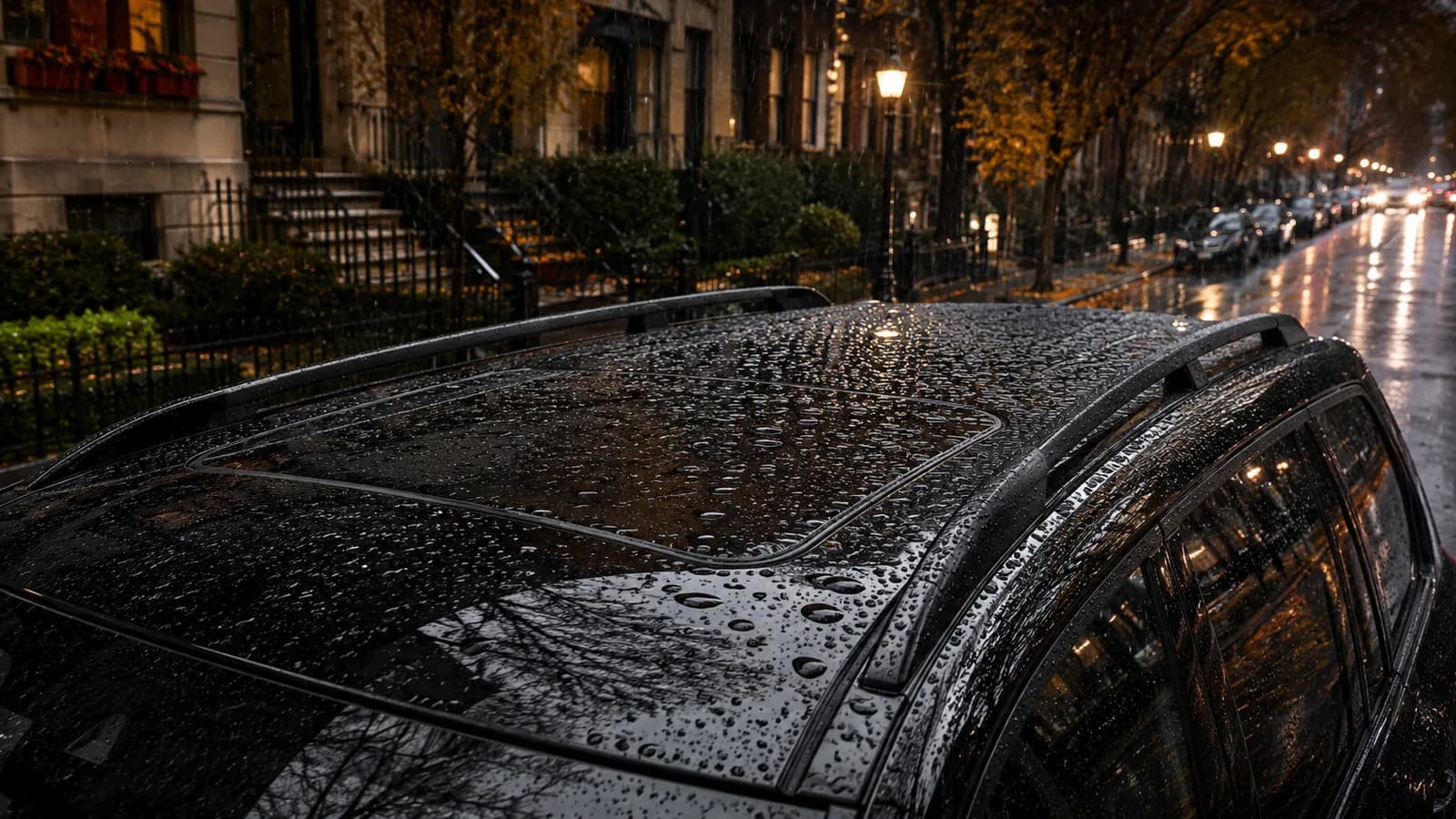
Throughout June, July, and August, your vehicle collects an enormous amount of environmental debris, tree pollen, airborne dust from highway construction along the Kennedy Expressway, pine needles from weekend trips to Michigan or Wisconsin, and sticky tree sap. When you drive with your sunroof tilted or open, this microscopic debris settles into the hidden water channels surrounding your sunroof glass. When the heavy rains of September arrive, those clogged channels overflow. Instead of draining safely onto the pavement, thousands of gallons of rainwater route directly into your vehicle’s headliner, down the interior pillars, and pool under your carpets, initiating a catastrophic sequence of electrical short circuits and rapid mold growth.
Anatomy of a Sunroof Flooding: How Summer Debris Traps Autumn Rain
To understand why a clogged drain tube causes so much structural damage, you must first understand the engineering behind modern automotive sunroofs. Contrary to popular belief, the rubber gasket surrounding your sunroof glass is not designed to be 100% watertight. Automakers know that a rubber seal exposed to Chicago’s extreme temperature swings, from 90°F summer sun to sub-zero winter freezes, will eventually allow small amounts of water to seep past its edges. To handle this inevitable water intrusion, vehicle engineers build a concealed perimeter drainage tray directly beneath the sunroof glass inside your roof structure. At each corner of this metal or composite tray sits a small drain port connected to a flexible rubber tube.
These four drain tubes route through the internal structure of your car in two main pathways:
-
**The Front Drains: **Route down the left and right A-pillars (the metal frames flanking your windshield), passing behind the dashboard, and exiting near the front wheel wells.
-
**The Rear Drains: **Route down the C-pillars (behind the rear passenger doors) and exit near the rear bumper assembly.
During the dry summer months, water entering these channels is minimal, but airborne debris is massive. Pollen, fine dust, and decaying leaves mix with rainwater to form a thick, organic sludge. As this sludge washes down the narrow 3/8-inch drain tubes, it settles at the bottom outlet valves, which are often fitted with restrictive check valves or rubber grommets designed to keep insects out. By late August, these check valves are completely sealed with dried organic mud. When a heavy September rainstorm hits Chicago, water fills the perimeter tray faster than it can drain, causing the concealed tray to overflow into the cabin structure.
Once the tray overflows, gravity dictates the destruction path. Water saturates the foam backing of your interior headliner, causing it to sag and stain. It then tracks down the interior A-pillar trim panels, soaking delicate side-curtain airbag modules, and flows behind the dashboard assembly. Finally, it collects at the lowest physical point of the vehicle: the passenger and driver footwells beneath the floor carpets.
The Silent Casualty: Floor Pan Electronics and Electrical Corrosion
When water pools in your car's footwells, the visible wetness on top of the carpet is only about 10% of the actual water trapped inside the vehicle. Modern automotive floors are not simply carpet laid over flat metal. Beneath the decorative carpet lies a thick, dense 2-inch layer of open-cell polyurethane acoustic foam. This foam is designed to absorb road noise and vibration, but when a sunroof drain overflows, it acts like a massive sponge. A carpet that feels "slightly damp" to the touch is often holding 3 to 5 gallons of trapped, stagnant water inside the foam beneath.
Auto manufacturers regularly use the space beneath the floor carpets to mount primary electronic modules, main wiring harnesses, and ground distribution blocks. Depending on your vehicle's make and model, the floor pan houses:
-
**Body Control Modules (BCM): **Controls power windows, central locking, interior lighting, and security systems.
-
**Transmission Control Units (TCU) & Amplifier Modules: **High-voltage audio, infotainment, and drivetrain computing.
-
**YAW Rate Sensors & Airbag Control Units: **Primary safety, traction, and stability control electronics.
When these computer modules sit submerged in stagnant rainwater trapped within the acoustic foam, galvanic corrosion occurs within hours. Electrical current running through multi-pin connectors reacts with the dirty water, corroding copper pins into green powder. If left unaddressed for more than 48 hours, the electrical damage becomes catastrophic. Your dashboard lights up with warning errors, the car refuses to start, power windows fail, and repair costs escalate into thousands of dollars in module replacements.
The Underground High-Rise Trap: HVAC Condensation & Mold Incubators
While blocked sunroof drains cause sudden water disasters from above, Chicago's late-summer weather creates a parallel biological threat from within: HVAC Evaporator Mold Growth. Throughout July and August, you run your vehicle’s air conditioning at maximum capacity to combat Chicago’s oppressive humidity. Deep inside your dashboard sits the HVAC evaporator core, a cold aluminum heat exchanger. As hot, humid cabin air passes over this freezing core, gallons of water condense on its metal fins. Under normal driving conditions, this condensation drains out beneath the vehicle through a rubber drain hose, but the evaporator housing remains dark, damp, and cool.
Now consider how luxury vehicle owners store their cars in Gold Coast, Lincoln Park, Streeterville, or River North:
-
You finish your evening commute along Lake Shore Drive with the AC blowing cold.
-
You park your car in a subterranean, multi-level residential parking garage.
-
These underground garages are cool, dark, stagnant, and heavily humid, lacking natural sunlight or cross-ventilation.
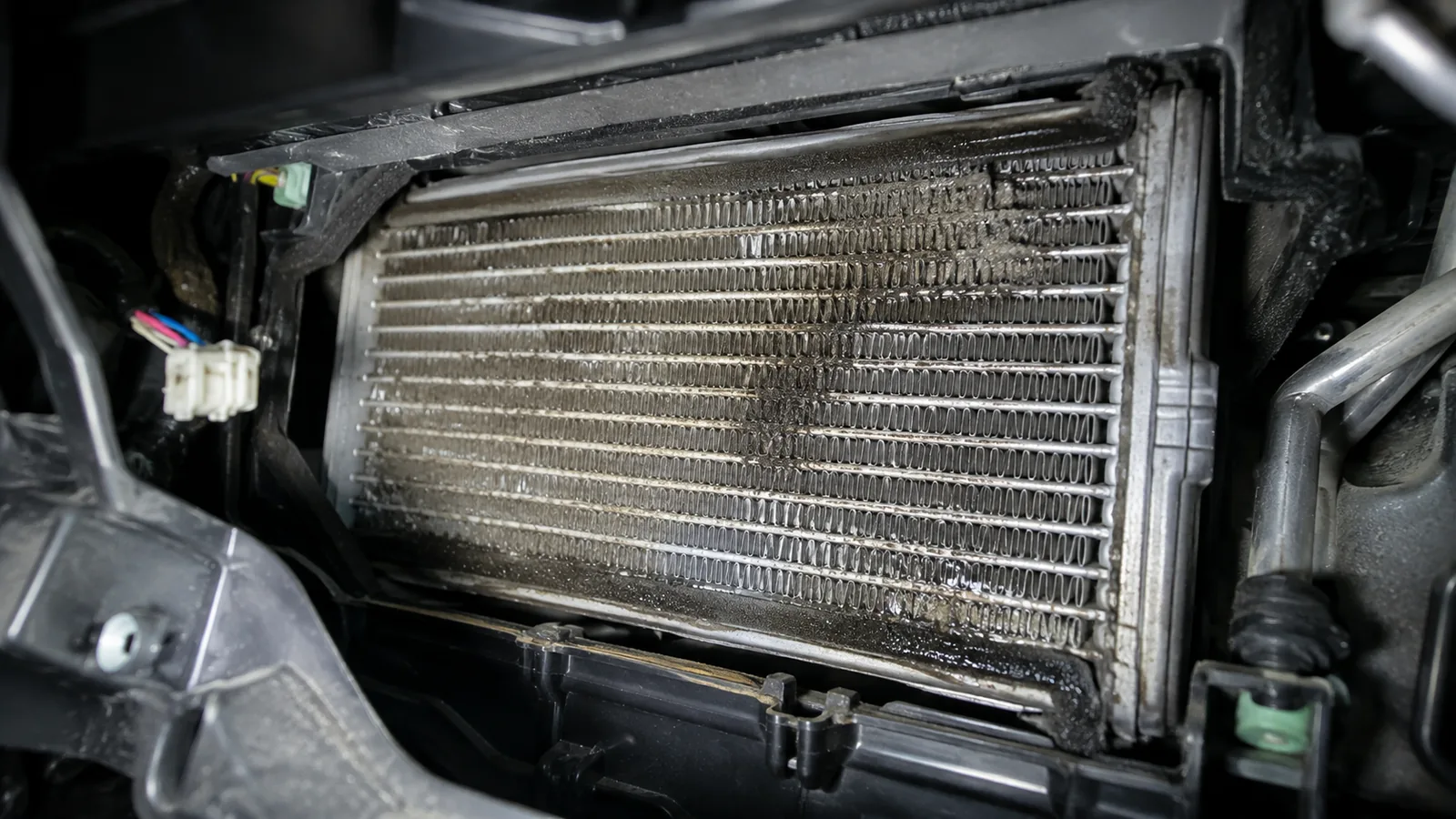
When you shut off the engine, the wet evaporator core inside your dash remains dripping wet in a dark, humid basement garage for 12 to 24 hours. This creates a medically hazardous environment for fungal spores, mold colonies (Aspergillus, Penicillium), and bacterial blooms. When you start your car the next morning and turn on the fan, the blower motor pushes air directly across this mold-infested core. A blast of foul, musty air fills the cabin, smelling like a damp basement, a wet dog, or dirty gym clothes. This isn't just a bad odor; it is an airborne respiratory irritant containing high levels of Volatile Organic Compounds (VOCs) that trigger allergies, headaches, and asthma.
Why DIY Solutions & Aerosol Vent Sprays Fail
When vehicle owners encounter musty odors or damp carpets, their immediate reaction is often to purchase over-the-counter quick fixes. On our shop floor, we spend considerable time reversing the secondary damage caused by these superficial attempts. A real interior odor and allergen removal service works at the source instead.
Auto parts stores sell cheap aerosol vent bombs or disinfectant sprays that claim to kill AC mold. Genuine AC service in Chicago reaches the evaporator itself. The instructions tell you to set the canister off inside the car with the AC running on recirculation mode. This method fails completely from an engineering standpoint because an aerosol mist circulating through the cabin air vents never develops enough pressure or chemical volume to penetrate the physical aluminum fins of the evaporator core hidden deep behind the firewall. These products rely heavily on synthetic perfumes designed to mask odors temporarily. Within 7 to 10 days, the artificial fragrance wears off, and the active mold colonies resume off-gassing. On top of that, the sticky chemical residue from these canisters settles onto interior glass, leather, and navigation screens, attracting dust and leaving an oily film.
When drivers realize their sunroof drains are clogged, some attempt to clear them at home by sticking a high-pressure shop air hose (100+ PSI) into the top drain hole. This is an extremely dangerous mistake. Automotive sunroof drain tubes are not solid metal pipes; they are multi-section rubber and plastic hoses connected at slip-fit plastic joints. Blasting 100 PSI of compressed air into a clogged tube creates massive backpressure. Instead of blowing the debris out the bottom, the high pressure pops the internal slip-joint disconnects inside the A-pillar or dashboard. Once an internal drain joint is blown apart behind the dash, every subsequent rainstorm will dump 100% of the water directly into your electrical dashboard wiring, turning a simple blockage into a $3,000 teardown repair.
Technical Performance Analysis
To understand why professional remediation is mandatory for surviving Chicago's autumn rain season, examine how various treatment methods compare across key structural and biological metrics:
| Performance & Safety Metric | Over-The-Counter Aerosol Sprays | DIY Compressed Air / Wire Methods | Carrectly Pneumatic Flush & Ozone (O3) Sterilization | | - | - | - | - | | Sunroof Drain Clearance | None (Does not address roof drains) | High Risk (Disconnects internal tube joints) | 100% Safe (Low-pressure regulated chemical flush) | | Sub-Carpet Moisture Extraction | None (Surface vacuuming leaves foam wet) | None | Total Extraction (Commercial extraction + industrial air movers) | | HVAC Evaporator Mold Removal | Temporary Masking (0–15% spore kill) | None | Complete Destruction (Direct-injection antimicrobial foaming) | | Biological VOC Elimination | Poor (Smell returns in 7–10 days) | None | Permanent (Molecular oxidation via industrial O3 gas) | | Electrical Module Protection | Zero protection | High risk of flooding dashboard wires | 100% Safety (Full sub-floor drying & contact cleaning) |
Protect Your Cabin Electronics Before the Next Downpour
Don't let clogged drains flood your footwells and ruin Body Control Modules. Get your drains cleared safely.
Schedule Sunroof Drain Inspection
The Carrectly Restoration Protocol: Step-by-Step Precision
Resolving a flooded interior and a contaminated HVAC system requires specialized industrial equipment, precise chemical formulations, and trained technicians. When a vehicle enters our climate-controlled Grand Ave facility, our shop foreman oversees a strict, four-stage technical protocol.
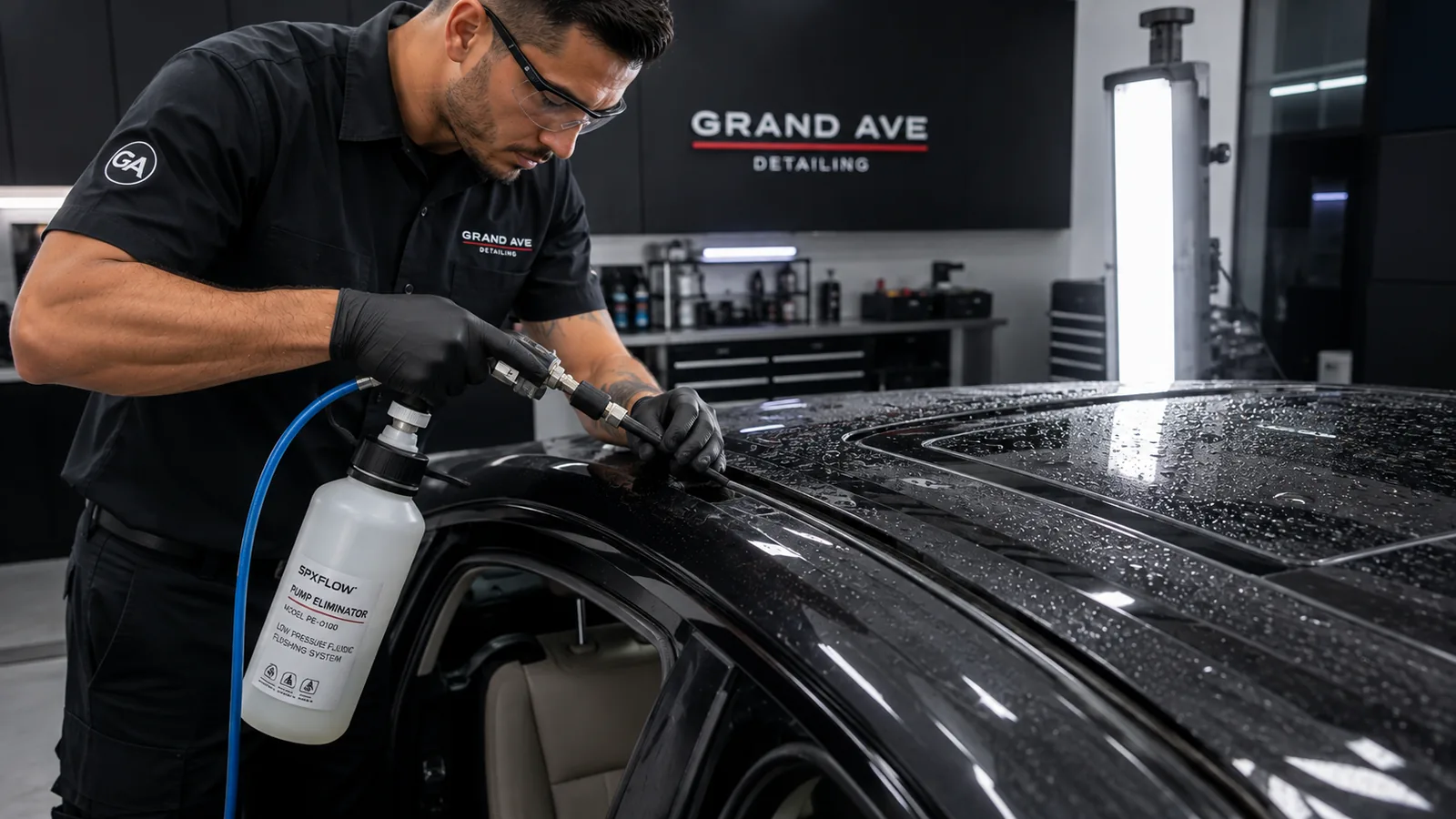
1. Controlled Low-Pressure Pneumatic Drain Flush
We never use harsh high-pressure air. Our technicians use a specialized, pressure-regulated fluidic flushing tool calibrated to a safe 15 PSI. We inject a bio-enzymatic cleansing fluid directly into the upper sunroof drain ports. This fluid breaks down organic sludge, algae, and dried pollen. We then apply gentle, pulsed pneumatic pressure to flush the liquified debris safely out through the bottom check valves, verifying 100% free-flowing drainage at all four corners.
2. Deep Sub-Floor Water Extraction & Drying
If water has penetrated the cabin floor, superficial carpet cleaning is useless. Our technicians lift the interior door sill plates, pull back the factory carpeting, and inspect the acoustic foam sub-floor.
-
We deploy commercial high-lift extraction units capable of pulling gallons of water out through the foam matrix.
-
We place high-velocity centrifugal air movers beneath the raised carpet structure, circulating temperature-controlled dry air across the true metal floor pan for 12 to 24 hours until moisture meters read zero.
-
We inspect all exposed wiring harnesses and electronic modules, treating electrical connectors with dielectric moisture-displacing contact cleaners to prevent long-term pin corrosion.
3. Direct Evaporator Core Antimicrobial Foaming
To destroy HVAC mold at the biological source, we bypass cabin air vents entirely. This pairs with the deep interior sanitization protocol we run on post-summer cabins. Our technicians access the HVAC housing through the cabin filter ductwork or drain tube, injecting a heavy, expanding antimicrobial foaming agent directly onto the aluminum fins of the evaporator core. As the foam expands, it coats every square millimeter of the heat exchanger, killing mold spores, bacteria, and fungal blooms on contact. The foam then liquefies and drains safely out beneath the car through the AC condensate tube, carrying dead organic matter with it.
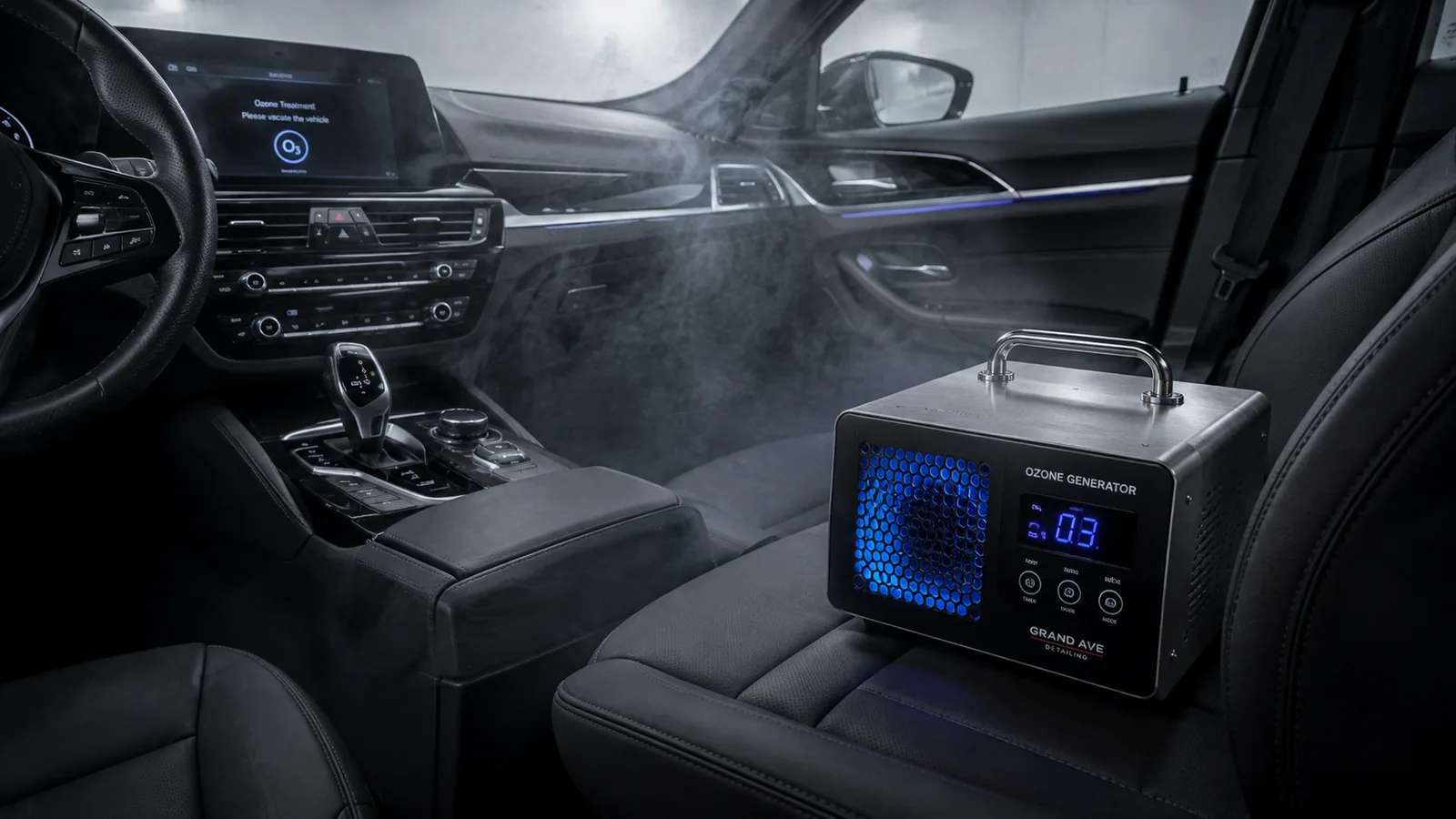
4. Industrial Ozone (O3) Sterilization & Air Purification
As the final phase of cabin decontamination, we deploy an industrial Ozone (O3) generator inside the sealed vehicle cabin for a calculated, time-controlled duration. Ozone is a highly reactive gas molecule containing three oxygen atoms. When circulated through the vehicle’s ductwork and interior materials, Ozone acts as an aggressive oxidant. It permeates deep into the headliner, seat upholstery, carpet fibers, and climate ducts, chemically attacking and shattering the cell walls of airborne mold spores, bacteria, and VOC odor molecules. Once the generator turns off, the unstable O3 gas naturally reverts back to harmless, pure Oxygen (O2), leaving the cabin smelling completely sterile, fresh, and free of artificial fragrances.
Why Chicago Drivers Rely on Carrectly
We have detailed the complex mechanics of water intrusion, sub-floor electronics, and HVAC microbiology. Now let's address the most significant operational challenge every busy Chicago car owner faces: time, wet dirty interiors, and lost productivity.
If your car suffers a flooded interior or a foul-smelling HVAC system during a busy workweek in Gold Coast, Lincoln Park, Streeterville, or West Loop, managing repairs through traditional auto shops is a miserable experience. Driving a car with wet carpets or moldy vents means sitting in a damp, foul-smelling environment while breathing in concentrated mold spores. High-rise residential parking garages strictly forbid residents from pulling up carpets, running extension cords for wet-vacs, or performing mechanical work in assigned spots. On top of that, you don't have time to drive across Chicagoland, sit in a loud waiting room at an auto repair facility, or deal with coordinating multiple rideshare vehicles to get to work.
Carrectly Auto Care was engineered specifically to eliminate this friction through our invisible auto care experience centered around door-to-door pickup and delivery logistics:
-
Effortless Key Handoff: Whether your car is parked in a subterranean garage in Streeterville, a condo space in Lincoln Park, or an office lot in the West Loop, our fully insured professional drivers meet you or retrieve the keys directly from your building’s concierge desk.
-
**Controlled Transport: **We transport your vehicle safely to our secure, climate-controlled facility at 3069 W Grand Ave. Here, using commercial extraction equipment, lift bays, and ozone generators, our master technicians perform the complete drying, drain clearing, and sanitization process.
-
**Flawless Return: **Once the cabin is completely dried, electronic modules inspected, drains cleared, and HVAC system sterilized, we deliver your vehicle back to your exact parking spot: clean, dry, healthy, and ready for your commute. You never lose a single minute of your busy schedule.

Wet Carpets or Musty Vents? We Pick Up Your Vehicle Today.
Our insured drivers retrieve your vehicle directly from your home or high-rise garage.
Calculate My Water Damage Restoration Cost
Frequently Asked Questions
1. How do I know if my car's water leak is caused by clogged sunroof drains or a bad windshield seal?
A clogged sunroof drain almost always manifests as water staining on the upper corner headliner, water dripping from the overhead console/map lights, or wetness concentrated in the front footwell carpets after heavy rain. A leaking windshield seal typically causes water to streak down the inside surface of the glass or leak directly behind the center dashboard. During our diagnostic evaluation at Grand Ave, we perform a controlled water pressure test to pinpoint the exact entry point before executing repairs.
2. Is the musty smell coming from my air vents dangerous to my health?
Yes. A distinct musty smell coming from your climate control vents indicates active colonies of mold (Aspergillus, Cladosporium), mildew, and bacteria growing on your HVAC evaporator core. When the AC fan blows, it disperses microscopic fungal spores and Volatile Organic Compounds (VOCs) directly into your breathing zone. This can cause allergic reactions, sinus congestion, severe headaches, fatigue, and trigger asthma attacks, especially in children or sensitive passengers.
3. Why can't I just dry my wet car carpet with a household wet-vacuum and a hair dryer?
Household wet-vacuums can only pull moisture from the top layer of carpet fabric; they lack the vacuum lift required to extract water from the 2-inch thick polyurethane acoustic foam sub-floor beneath. On top of that, surface heat from a hair dryer dries the carpet fibers while leaving the underlying foam dripping wet, creating a dark, warm incubator for mold that will completely destroy your carpet backing within 72 hours.
4. Will standing water beneath my car's carpet cause permanent electrical damage?
If left unaddressed, yes. Modern vehicles house critical electronic components under the floor carpets, including Body Control Modules (BCM), airbag sensors, and main wiring harnesses. Standing water triggers rapid galvanic corrosion on multi-pin electrical connectors, turning copper pins into green powder and short-circuiting expensive computer boards. Prompt professional extraction and thorough drying are mandatory to prevent thousands of dollars in electrical failures.
5. How often should I have my vehicle's sunroof drains inspected and cleared in Chicago?
Given Chicago’s heavy seasonal debris, ranging from spring tree pollen and summer oak dust to autumn leaves, we strongly recommend having your sunroof drain tubes inspected and flushed once a year, ideally in late summer (August or September) before the heavy autumn rains begin. This simple preventative measure completely eliminates the risk of interior flooding.
6. Is your concierge driver service fully insured while transporting my vehicle to W Grand Ave?
Yes, completely. Total safety, transparency, and peace of mind are the core foundations of our concierge operational model. From the exact second our professional driver takes possession of your keys until your vehicle is parked safely back in its space, your car is covered under Carrectly's multi-million-dollar Garage Keepers and commercial transport insurance policies. Your personal insurance policy is never involved.
7. Does the Ozone (O3) sanitization process leave any chemical odors or toxic residue in the car?
No. Ozone (O3) is a natural gas that performs an aggressive oxidation process and then rapidly dissipates. Once the industrial generator shuts down, the unstable O3 molecules naturally break down and revert back into pure Oxygen (O2) within 30 to 45 minutes. It leaves zero chemical residue, zero oily films, and zero artificial fragrances, just clean, completely sterile air.
8. Will insurance cover the cost of repairing a flooded car interior caused by clogged sunroof drains?
In many cases, full-coverage auto insurance policies will cover interior water damage, electrical module replacement, and mold remediation resulting from sudden water intrusion. However, insurance adjusters frequently look for proof that the vehicle owner took prompt action to mitigate the damage. Carrectly provides detailed digital diagnostic reports, photos, and itemized estimates that you can submit directly to your insurance adjuster to speed up your claim.
Stop Water Intrusion. Eliminate Mold at the Source.
Our fully insured concierge drivers retrieve your car directly from your Gold Coast, Lincoln Park, or Streeterville garage, clear your drainage systems, and sterilize your cabin at our Grand Ave facility.
Book Concierge Pickup or call/text (773) 800-9085
Facility: 3069 W Grand Ave, Chicago, IL 60622
- ozone treatment
- chicago
- problem diagnostics
- mechanical repair
- interior detailing