
Autumn Night Driving: Headlight UV Restoration Guide
Dim, yellow headlights ruin night driving safety. Get industrial 2K UV headlight restoration & optical clarity via Carrectly's Chicago concierge pickup!
- September 23, 2026
- Carrectly Auto Care
- 12 min read
By the Senior Shop Foreman at Carrectly Auto Care (3069 W Grand Ave, Chicago, IL)
Oxidized, yellowed polycarbonate headlights lose up to 80% of light output, creating extreme hazards during dark autumn commutes across Chicago’s Kennedy Expressway (I-90) and Lake Shore Drive. Temporary DIY hacks like toothpaste or WD-40 fail within days because they lack UV protection. Carrectly Auto Care restores headlamp optics using multi-stage wet sanding and industrial 2K polyurethane clear coating or PPF at our W Grand Ave facility, retrieved and returned via our door-to-door concierge service.
The Shrinking Daylight of Chicago Autumn: A Hidden Commuter Hazard
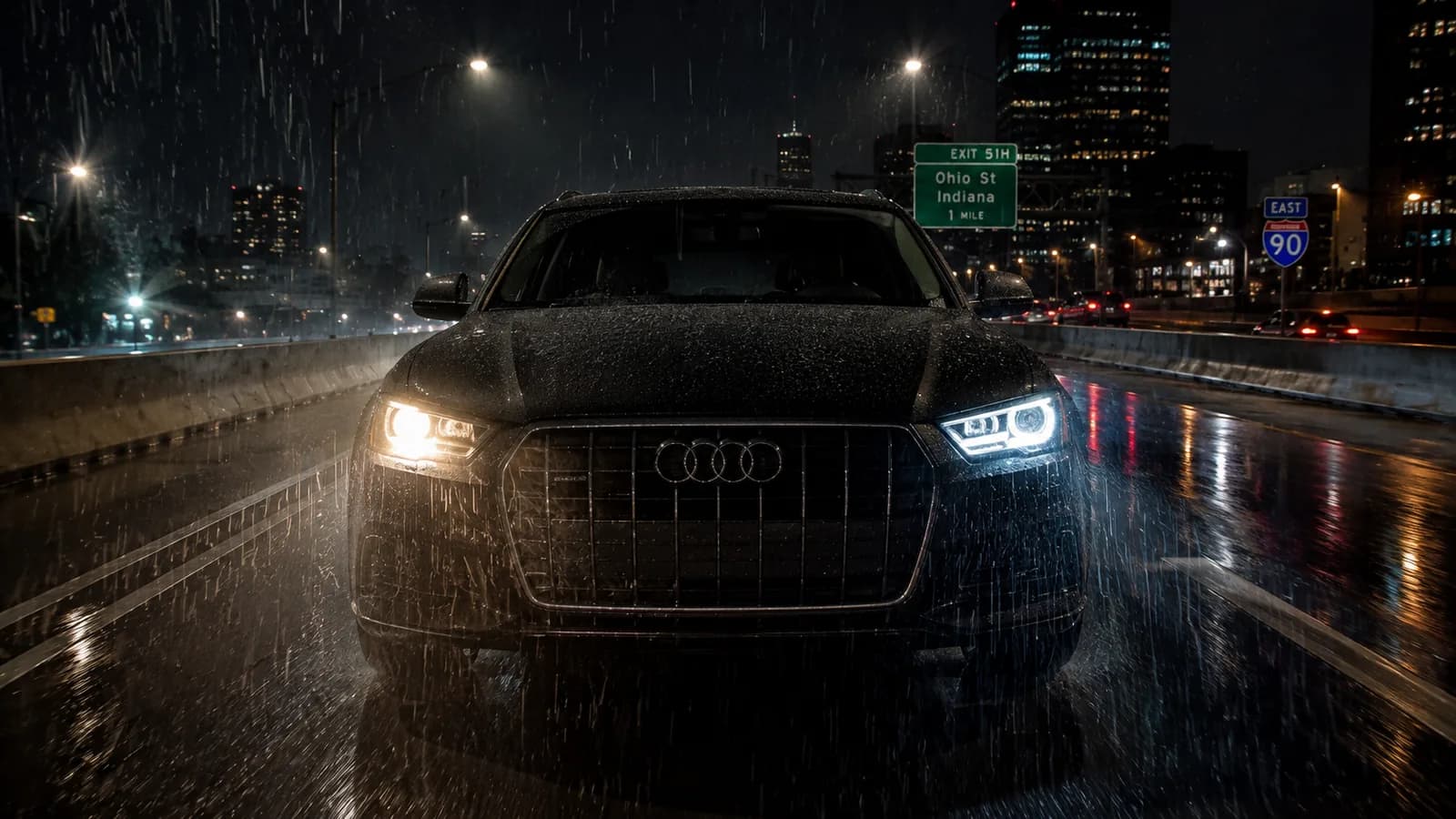
On our shop floor at 3069 W Grand Ave, late August and September signal a distinct shift in vehicle service requests. As the autumn equinox approaches, daylight hours across Chicagoland contract rapidly. Drivers who spent the summer commuting home in bright late-afternoon sunshine suddenly find themselves navigating heavy evening traffic on I-90, I-94, or the Eisenhower Expressway in pitch darkness and pouring rain. It is during these first dark autumn commutes that a pervasive, dangerous vehicle defect becomes instantly undeniable: severely yellowed, hazy, and oxidized headlight lenses.
To most drivers, cloudy headlights are viewed merely as a cosmetic eye-sore, an aesthetic sign that a vehicle is aging. But as the Senior Shop Foreman at Carrectly Auto Care, I evaluate headlight clarity through the strict lens of optical engineering and active traffic safety. When a vehicle’s headlamp lenses degrade from crystal clear to a cloudy, milky yellow, light output drops by as much as 80%. Instead of throwing a crisp, focused beam of light 300 feet down a dark street in the West Loop or Bucktown, oxidized lenses scatter the light in a weak, blinding haze.
Driving in Chicago during autumn rainstorms with compromised headlights is an extreme safety hazard. Clear glass matters just as much on those nights, which is why we also handle windshield repair. It severely impairs your ability to spot deep potholes, pedestrians stepping off curbs, or cyclists navigating dark side streets. Yet thousands of drivers delay fixing their lights because they dread taking a day off work to sit in a dirty repair shop waiting room.
The Physics of Polycarbonate Degradation: Why Headlights Turn Yellow
To understand why modern headlights turn yellow and hazy, you must first understand the material science of modern automotive lighting assemblies. Up until the late 1980s, vehicle headlights were manufactured from heavy, thick glass. While glass is impervious to ultraviolet (UV) degradation, it shatters easily upon impact from stone chips and limits aerodynamic design. To create sleek, lightweight, shatterproof front-end designs, automotive manufacturers transitioned universally to polycarbonate thermoplastic. Polycarbonate is a remarkable engineering polymer: it is extremely light, optically clear, and virtually unbreakable under impact. However, polycarbonate has one massive natural vulnerability: it is severely susceptible to solar ultraviolet (UV-A and UV-B) radiation.
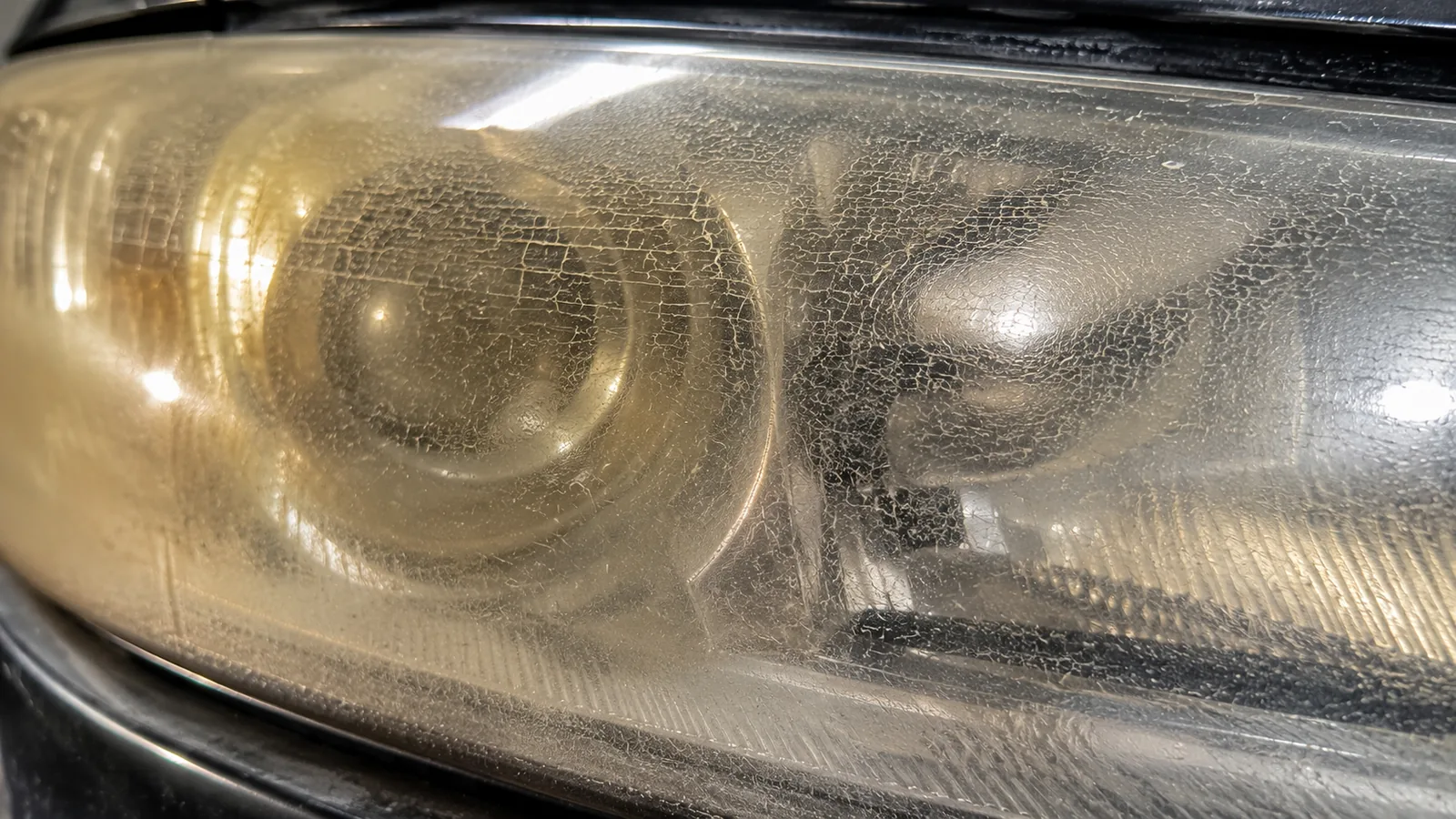
To protect raw polycarbonate from deteriorating under sunlight, original equipment manufacturers (OEMs) apply a razor-thin protective hard coat during manufacturing. Over three to five years of driving in Chicago, this factory coating absorbs immense environmental punishment:
-
**Solar UV Radiation: **Intense July and August sun bakes the clear coat, breaking down its cross-linked chemical bonds.
-
**Chemical Degradation: **De-icers, road salt, and harsh automatic car wash detergents strip away the protective coating's UV inhibitors.
-
**Physical Abrasion: **Fine sand, gravel, and road grit blasted against the front of the vehicle at 65 mph on the highway create thousands of microscopic pitting impact marks.
Once the factory hard coat breaks down, the bare polycarbonate beneath is exposed directly to oxygen and sunlight. The polymer chains oxidize, forming a dense layer of yellow, cloudy, microscopic cracks known as surface crazing.
When your headlight lens is clear, the light bulb (whether halogen, HID xenon, or LED) projects light through the smooth inner surface and exits cleanly through the outer lens. The headlight reflector housing is designed to focus that light into a specific photometric beam pattern with a sharp cutoff line, illuminating the road surface while preventing glare from blinding oncoming traffic. When the outer lens turns yellow and oxidized, it transforms from a clear window into a frosted diffuser lens. Instead of passing straight through, light rays hit the microscopic yellow cracks and bounce in every direction, resulting in a dramatic loss of forward illumination and dangerous glare reflection for oncoming traffic.
The "Toothpaste and WD-40" Myth: Exposing Internet DIY Failures
When drivers notice their headlights getting hazy, their first response is often to search the internet for cheap home remedies. The internet is flooded with videos claiming you can restore oxidized headlights in five minutes using household toothpaste, baking soda, OFF bug spray, or WD-40. On our shop floor, we frequently have to repair lenses that were permanently damaged by these misguided attempts. Our headlight restoration service explains the professional alternative.
Toothpaste contains mild abrasives like calcium carbonate or hydrated silica designed to scrub plaque off human teeth. When rubbed onto a cloudy headlight, these mild abrasives scrub off the top layer of loose dirt and light oxidation. For a few hours, the lens looks slightly cleaner. However, toothpaste does not possess the abrasive grit necessary to remove deep, cross-linked UV crazing. More importantly, toothpaste contains zero chemical UV blockers or protective sealant properties. The moment you wash the toothpaste off, you leave the raw, unshielded polycarbonate completely bare to the elements. Within 7 to 14 days, solar radiation accelerates oxidation on the bare plastic, making the lens twice as yellow and cloudy as it was before you started.
Using bug spray containing DEET to clean headlights is one of the most destructive tricks on the internet. DEET is a powerful chemical solvent capable of dissolving certain synthetic plastics. When sprayed onto a headlight, DEET chemically melts the top layer of polycarbonate, liquefying the yellow oxidation into a smooth sludge. While it looks clear for a single day while wet, the DEET permanently damages the chemical matrix of the plastic, causing deep structural stress-cracking. Once the solvent evaporates, the plastic cures into an opaque, ruined mass that often requires replacing the entire headlight assembly.
Technical Performance Analysis
To understand why industrial headlight restoration is essential for surviving dark Chicago autumn commutes, examine how various repair methods compare across key optical and technical metrics:
| Technical & Performance Metric | DIY Toothpaste / Bug Spray Hacks | Standard Mobile Buffing Service | Carrectly Industrial 2K UV Hard-Coat Restoration | | - | - | - | - | | Oxidation Layer Removal | Superficial (Scratches surface layer) | Moderate (Removes top layer with polish) | 100% Elimination via progressive wet-sanding | | Optical Beam Pattern Restoration | Poor (Leaves light scattered and hazy) | Fair (Improves visibility temporarily) | 100% Factory Clarity (Precise photometric cutoff) | | UV Resistance Mechanism | Zero UV protection | Temporary wax/sealant (Washes off in weeks) | Permanent 2K Polyurethane UV-blocking shield | | Durability in Chicago Winter Salt | Fails in 7 to 14 days | Fails in 1 to 3 months | Multi-Year Protection (3 to 5+ years) | | Impact & Chemical Resistance | Non-existent | Low | High (Resists road grit, salt, and car wash detergents) |
Don't Risk Dark Commutes with Dim Lights
Restore 100% factory beam projection and UV protection before autumn rainstorms.
Get Your Headlight Restoration Quote
The Carrectly Restoration Protocol: Step-by-Step Precision
You cannot fix chemical UV oxidation with a quick wipe and a bottle of retail polish. Restoring optical polycarbonate clarity requires methodical mechanical leveling, chemical decontamination, and high-solid protective clear coating. When a vehicle enters our climate-controlled facility on W Grand Ave, our technicians execute a rigorous four-stage technical protocol.
1. Surgical Precision Masking and Surface Inspection
Before any abrasives touch the vehicle, our technicians wash the lighting assembly with pH-neutral degreasers to remove road tar and bug residue. We then apply double layers of heavy-duty automotive masking tape around the surrounding paint, chrome trim, and bumper panels. This isolates the headlight assembly completely, ensuring that neighboring paint surfaces are protected during the sanding process.
2. Multi-Stage Progressive Wet-Sanding
To eliminate the yellowed, micro-cracked plastic layer, we must mechanically level the polycarbonate surface using progressive grit paper submerged in a high-lubricity mist. We start with 800 grit wet sanding to remove the heavy, yellowed factory hard coat and level deep UV pitting. We then step up to 1500 grit to refine the coarse sanding marks into a fine, uniform haze, and finish with 2500 to 3000 grit micro-finishing paper to polish the polycarbonate structure to an ultra-fine state, preparing the plastic pores to accept the new chemical protective barrier.
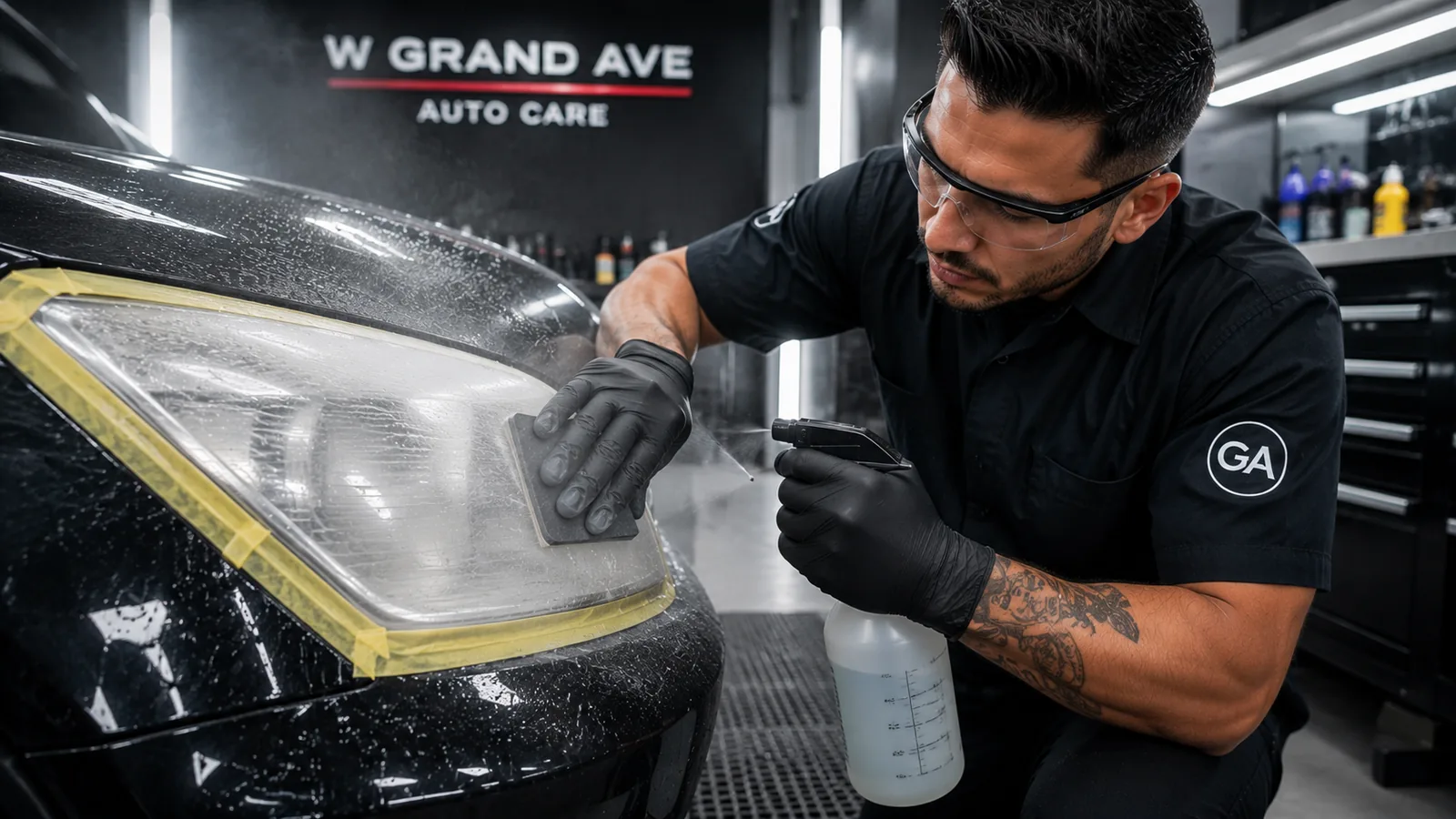
3. Solvent Decontamination and Adhesion Promotion
Once wet-sanding is complete, the lens is wiped down with specialized, residue-free automotive surface cleaners to eliminate all plastic slurry, oils, and moisture. We then apply an engineered adhesion promoter designed to create a molecular bridge between the raw polycarbonate plastic and the incoming protective topcoat.
4. Industrial 2K Polyurethane UV Hard-Coat Spraying
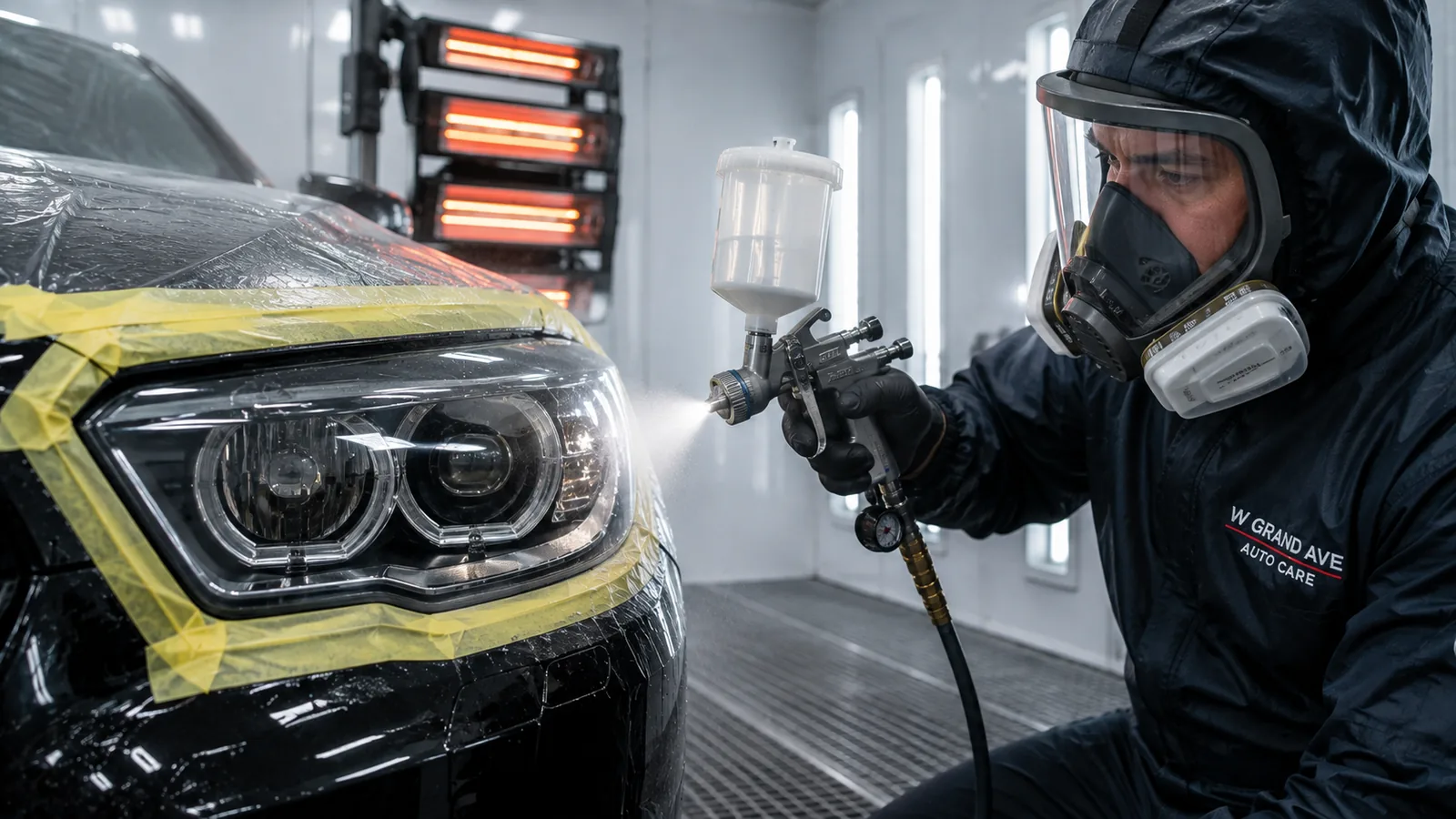
This is the most critical step that separates professional restoration from temporary DIY fixes. In our controlled paint booths, we apply an automotive-grade 2K (Two-Component) Polyurethane Clear Coat containing advanced UV blockers and chemical hardeners. Unlike 1K aerosol sprays or retail hand-applied sealants, 2K polyurethane cures through a chemical reaction between resin and hardener. It flows into the microscopic sanding marks, instantly restoring 100% optical clarity while forming a thick, rock-hard, non-porous shield over the plastic. The lens is then baked under infrared curing lamps, creating a permanent barrier that resists UV yellowing, road salt, and highway gravel for years. Alternatively, for clients desiring maximum rock-chip protection, we install custom-cut Paint Protection Film (PPF) over the restored lens.
Why Chicago Drivers Need Carrectly
We have outlined the science behind polycarbonate oxidation and our industrial restoration protocol. Now let's address the primary hurdle facing busy Chicago car owners: busy schedules, lack of time, and winter repair hassles. Our Chicago concierge auto service removes that hurdle entirely.
Think about what happens when you decide to fix cloudy headlights through traditional repair channels. You have to research local body shops or dealership service centers, many of which refuse to repair headlights and instead try to sell you expensive new OEM headlight units ($800 to $2,500 per side). You have to take time off work or give up a weekend morning to drive through heavy traffic to a repair shop. Then you sit in a loud, dirty waiting room for two to three hours while the work is being done, or arrange expensive rideshares back to your office. Most busy professionals in West Loop, Bucktown, Lincoln Park, or Streeterville simply do not have time for that hassle. They continue driving at night with dangerous, dim headlights, risking nighttime accidents and pedestrian collisions.
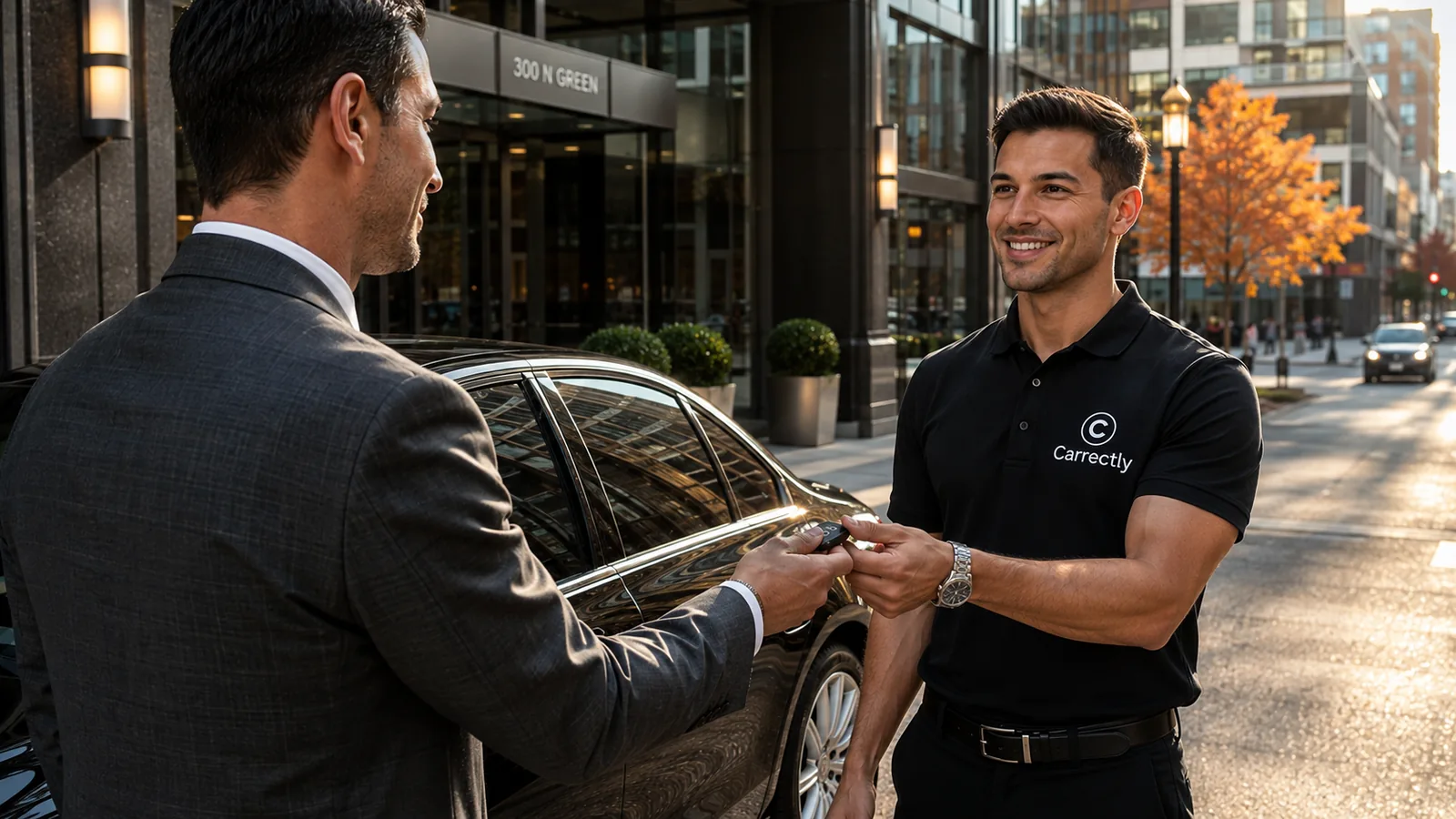
Carrectly Auto Care was engineered specifically to eliminate this friction through our invisible auto care experience centered around door-to-door pickup and delivery logistics:
-
Effortless Key Handoff: Whether your car is parked in a subterranean high-rise garage in Streeterville, a condo space in Lincoln Park, or an office lot in the West Loop, our fully insured professional drivers meet you or retrieve the keys directly from your building’s concierge desk.
-
**Controlled Transport: **We transport your vehicle safely to our secure, climate-controlled facility at 3069 W Grand Ave. Here, under specialized lighting, temperature, and dust-free paint booth conditions, our master technicians execute the wet-sanding, 2K clear coat application, and infrared curing process.
-
**Flawless Return: **Once the headlights are fully cured, optically tested, and cleaned, we deliver your vehicle back to your exact parking spot: crystal clear, bright, safe, and ready for your evening commute. You never lose a single minute of your workday.
Crystal-Clear Headlights with Zero Disruption to Your Workday
Our insured drivers pick up your vehicle directly from your home or office.
Calculate My Concierge Restoration Cost
Frequently Asked Questions
1. How long will a professional 2K clear coat headlight restoration last on my vehicle?
When executed properly using progressive wet-sanding, adhesion promoters, and automotive-grade 2K polyurethane clear coat cured under infrared lamps, the restoration typically lasts 3 to 5+ years. Because the 2K hard coat contains heavy UV blockers and hardeners, it resists solar oxidation and road salt just like your car’s factory body paint.
2. Is it better to restore my original headlights or buy cheap aftermarket replacement lights online?
Restoring your original factory headlights is almost always the superior choice. Cheap aftermarket headlight assemblies sold online often suffer from poor plastic quality, thin internal wiring, and improperly aligned reflector bowls that scatter light erratically. Restoring your original OEM assemblies preserves factory wiring compatibility, exact body panel fitment, and superior optical beam geometry at a fraction of the replacement cost.
3. Can headlight oxidation occur on the inside surface of the lens cover?
In over 95% of cases, oxidation, yellowing, and haze occur exclusively on the outside surface of the lens due to direct exposure to UV sunlight, road grit, and weather. However, if a headlight housing has a cracked seal or missing rubber bulb cap, moisture can enter the assembly, causing condensation, water spots, or dirt film on the inside. During our diagnostic inspection at Grand Ave, we verify whether the contamination is internal or external before beginning service.
4. Will restored headlights pass state safety inspections and alignment checks?
Yes. Restoring optical clarity eliminates light scattering and restores the sharp photometric beam cutoff line required for proper night visibility. By removing cloudy haze, your headlights project maximum lumens onto the road surface, ensuring your vehicle easily passes safety guidelines and projects correct lighting geometry.
5. How do I know if my headlights need restoration or if the bulbs are just dying?
If your headlight lenses look milky, yellow, or rough when you view them in daylight, the lenses themselves are scattering the light output. However, if your lenses are crystal clear but the light output looks dim and yellowish, your bulbs (especially halogen or aging HID xenon bulbs) may be reaching the end of their operational lifespan. Our master technicians inspect both the lens condition and the bulb output to recommend the exact service required.
6. Is your concierge driver service fully insured while transporting my car to W Grand Ave?
Yes, completely. Total safety, transparency, and peace of mind are the core foundations of our concierge operational model. From the exact second our professional driver takes possession of your keys until your vehicle is parked safely back in its space, your car is covered under Carrectly's multi-million-dollar Garage Keepers and commercial transport insurance policies. Your personal insurance policy is never involved.
7. Can you install Paint Protection Film (PPF) over restored headlights for extra durability?
Yes! Applying a clear, 8-mil thick Paint Protection Film (PPF) over a freshly restored lens provides the ultimate defense against Chicago road conditions. The PPF acts as a self-healing armor that absorbs physical impacts from flying gravel and highway road salt, while blocking 99% of UV radiation, ensuring your headlights remain crystal clear indefinitely.
8. Will restoring my headlights help improve the resale value or lease return inspection of my car?
Aesthetics play a massive role in vehicle appraisal. Yellow, cloudy headlights instantly make a vehicle look old, neglected, and poorly maintained, which can reduce trade-in value by hundreds of dollars and trigger lease return condition penalties. Restoring your headlights to factory clarity instantly rejuvenates the front-end appearance of your car, maximizing resale appeal and passing lease turn-in inspections with ease.
Drive Safely This Autumn. Restore Optical Clarity Today.
Our fully insured concierge drivers retrieve your car directly from your Gold Coast, Lincoln Park, or West Loop garage, execute industrial 2K UV restoration at our Grand Ave facility, and return it flawlessly.
Book Concierge Pickup or call/text (773) 800-9085
Facility: 3069 W Grand Ave, Chicago, IL 60622
- headlight
- uv protection
- vehicle safety check
- chicago
- headlight restoration