
Chicago’s “Pollen Layer”: How Spring Allergies Are Damaging Your Car Paint and Cabin Air Quality
Chicago’s spring pollen surge can damage your car’s paint and affect cabin air quality. Learn how ceramic coating protects your exterior and HEPA filters improve in-car air during allergy season.
- July 8, 2026
- Carrectly
- 6 min read
The Pollen Layer: Protecting Your Paint and Your Lungs This Spring
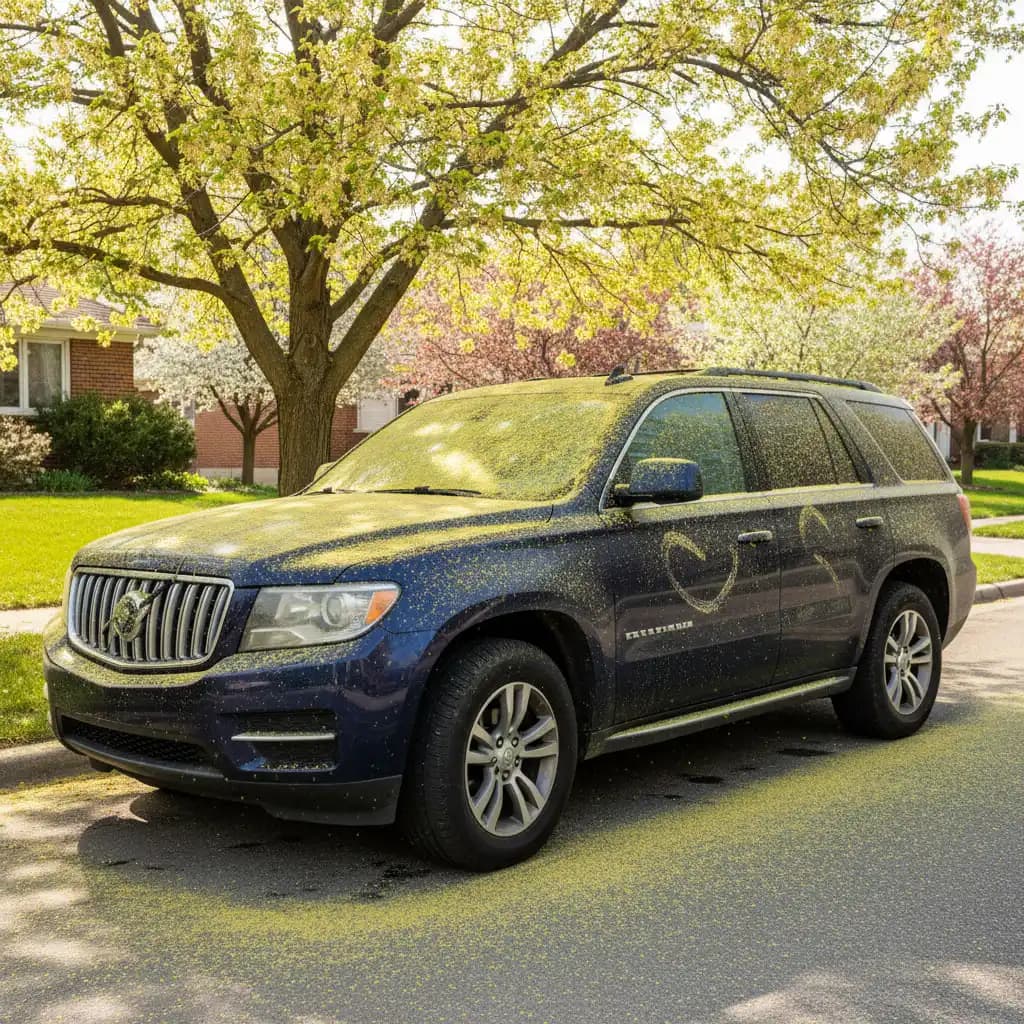
Spring in the Windy City is a season of dramatic transitions. As the tulips begin to bloom in Lincoln Park and the outdoor patios in Wicker Park fill with life, a less welcome guest arrives: the "yellow plague." In 2026, Chicago is seeing an early and aggressive pollen surge, covering everything from West Loop high-rises to the residential streets of Bucktown in a fine, sticky dust.
While most people view this yellow coating as a minor aesthetic nuisance or a trigger for hay fever, the reality is far more technical. At Carrectly, our "Car Doctors" treat pollen as a bio-chemical hazard. Left untreated, it can physically etch your paint and compromise your cabin’s air quality. This season, protecting your vehicle is about more than just a car wash—it’s about high-tech surface defense and medical-grade interior filtration.
The Microscopic Warfare on Your Paint
To understand why you need specialized pollen removal car paint services, you have to look at a pollen grain under a microscope. Unlike standard household dust, which is relatively smooth, a single grain of pine or oak pollen is a complex, spiky structure.
The "Hook" Phenomenon
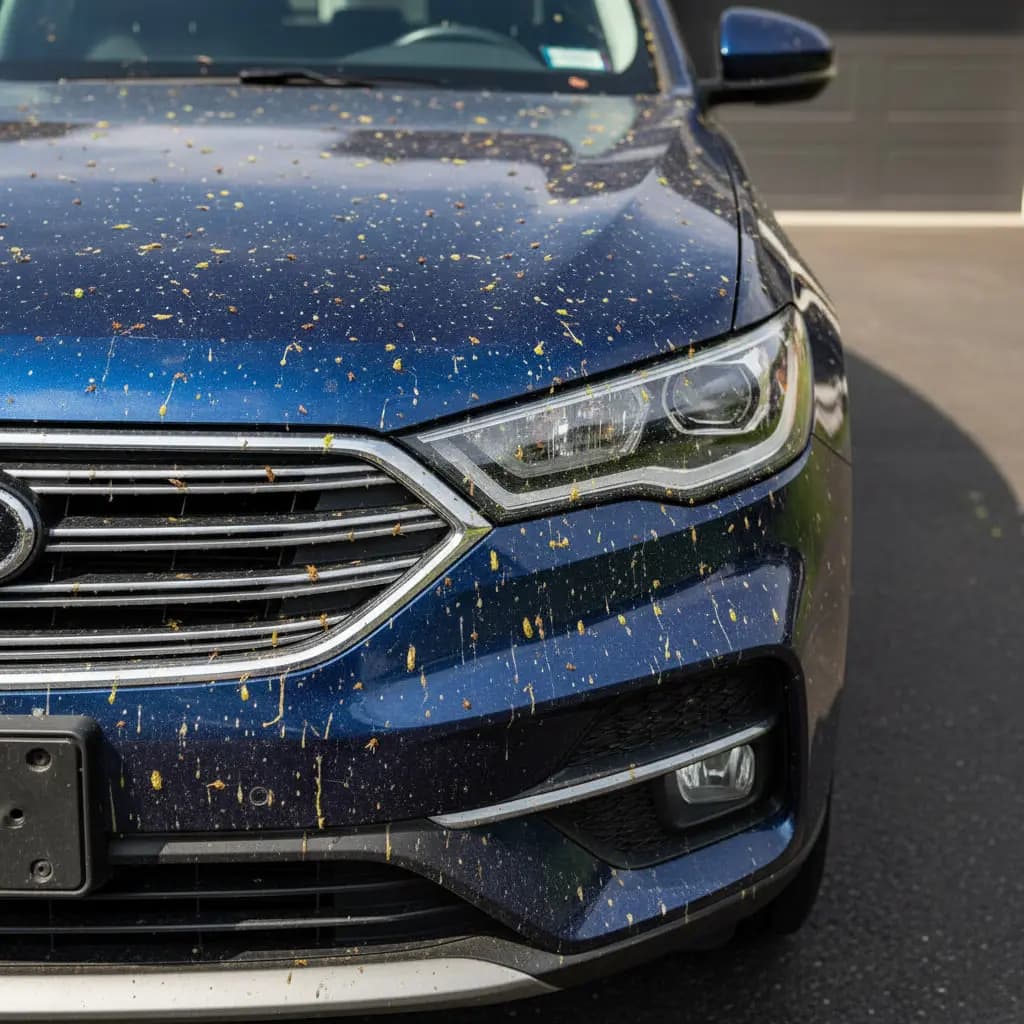
Nature designed pollen to be "sticky" so it can adhere to insects and wind-blown surfaces for reproduction. On a microscopic level, these grains feature tiny hooks and projections that allow them to latch onto the porous surface of your car’s clear coat. When you see a yellow film on your hood, you are actually looking at millions of these tiny anchors.
The danger arises when these "hooks" meet moisture—whether it’s the morning dew off Lake Michigan or a light spring shower. When pollen gets wet, it releases acidic compounds that can initiate a process called "etching." This chemical reaction begins to break down the clear coat’s polymers, leading to permanent staining and a loss of that mirror-like reflection. If you attempt to wipe away dry pollen with a cloth, those same microscopic spikes act as a fine abrasive, creating the "spider-web" swirl marks that ruin your Chicago auto aesthetics.
Ceramic Coating: The Ultimate Pollen Repellent
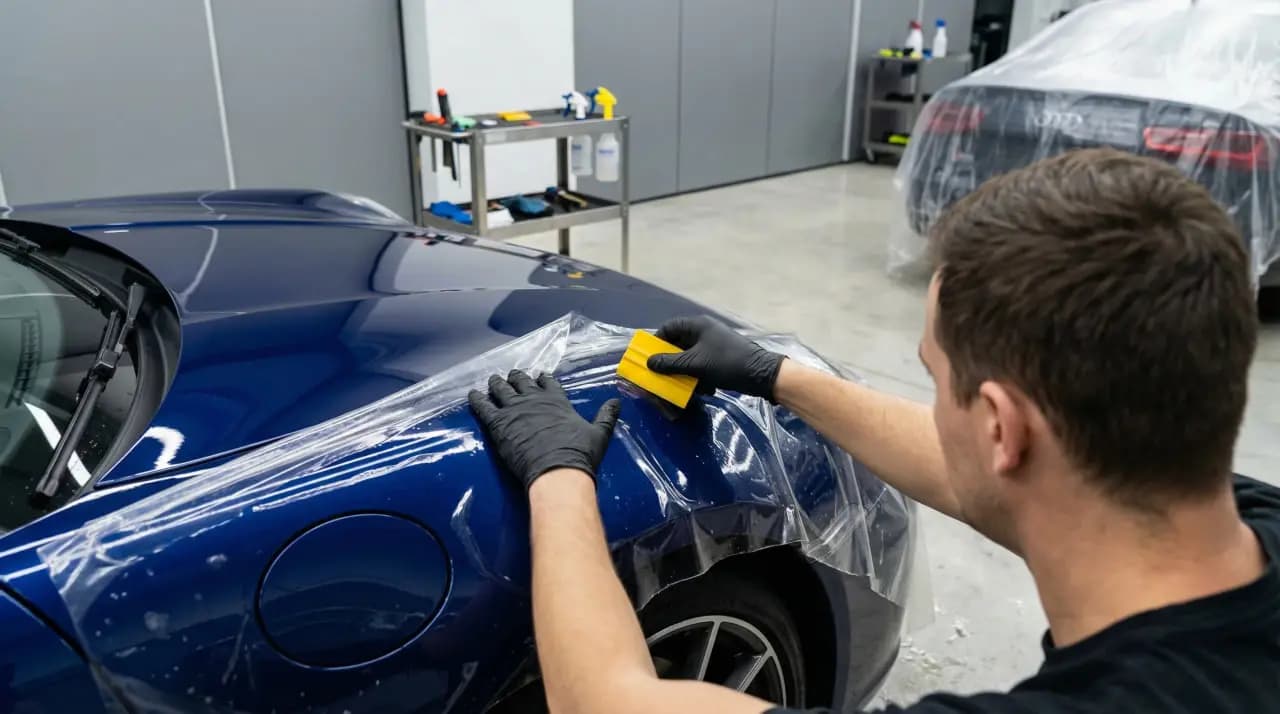
The best defense against this biological attack is a high-tech offensive. Spring detailing Chicago in 2026 is defined by the application of nanoceramic coatings. By utilizing Silicon Dioxide (SiO2) molecular bonding, a ceramic coating fills the microscopic pores of your paint, creating a surface that is physically too smooth for pollen to "hook" into.
Hydrophobic Advantage
Professional ceramic coating Chicago creates a high-tension, hydrophobic surface. This means that instead of pollen bonding to the paint, it simply sits on top of a glass-like shield. When it rains or when you perform a maintenance wash, the pollen is safely lifted away by the water beads rather than being dragged across the finish.
At Carrectly, we apply coatings with a 9H hardness rating, providing a sacrificial layer that is significantly more resistant to the acidic breakdown caused by wet pollen. It’s the difference between having your car "clothed" in a delicate fabric and having it shielded in a high-tech polymer suit.
Breathing Easy: The HEPA Upgrade for Your Cabin
While we protect the exterior, the interior of your vehicle requires a different kind of technical attention. As you drive through Loop traffic with your vents open, your car's HVAC system acts as a vacuum, pulling in millions of pollen spores every minute.
Why Standard Filters Fall Short
Most vehicles come equipped with a standard paper or multi-fiber cabin filter. While these are designed to trap large debris like leaves or soot, they often struggle with fine particulates. A standard filter might trap 70-80% of allergens, leaving the rest to circulate in the enclosed space of your cabin, where concentrations can be up to five times higher than the outdoor air.
The HEPA Difference
For the 2026 allergy season, Carrectly is championing the cabin air filter replacement with HEPA-grade media. HEPA (High-Efficiency Particulate Air) filters are a surgical-grade technology designed to remove at least 99.97% of particles as small as 0.3 microns.
- Micron-Level Protection: A typical pollen grain is 10 to 100 microns; a HEPA filter traps these with ease, along with bacteria, mold spores, and even some virus-sized particles.
- Activated Carbon: Our premium filters often include an activated charcoal layer to neutralize the "smelly car A/C" odors caused by damp pollen trapped in the evaporator.
By upgrading your filter, you aren't just maintaining your car; you are creating a "clean room" environment. This is the difference between a miserable, sneezing commute and a refreshed, productive drive to a weekend show at Ravinia.
Professional Interior Decontamination vs. Standard Cleaning
Many of our clients ask: "Can't I just vacuum the pollen out?" The answer is no. Standard shop vacuums often lack the filtration required to trap pollen; they simply suck it up from the carpet and exhaust it back into the air as a finer mist.
A professional car interior detailing Chicago at Carrectly utilizes specialized extraction and decontamination protocols:
- HEPA-Filtered Extraction: We use industrial vacuums that prevent the recirculation of allergens.
- Steam Sanitization: 212°F+ steam kills mold spores and loosens the "sticky" pollen resins from deep within the fabric fibers.
- Antimicrobial Treatment: We apply a non-toxic, pH-balanced barrier to upholstery that inhibits future biological growth during the humid Chicago summer.
The Concierge Thread: Peace of Mind for Allergy Season
We know that for the busy professional in River North or the family in Lincoln Square, the biggest barrier to health and car protection is time. You shouldn't have to spend your Saturday in a waiting room to get the air quality and paint protection you deserve.
Our concierge service is built to solve this logistical friction.
- Effortless Pickup: We pick up your vehicle from your home or office.
- Expert Execution: While you work from home or attend meetings, our technicians perform the full spring audit: swapping your filters, decontaminating the interior, and sealing the exterior with a fresh ceramic layer.
- Direct Delivery: We return your car, fully safety-verified and "allergy-proofed," before your evening commute.
It is the most efficient way to ensure your vehicle is ready for a summer of road trips to Lake Geneva or South Haven without the yellow dust following you inside.
Authority and Expertise: Your Car Doctors
At Carrectly, we don't just "clean" cars; we manage their technical health. We understand the specific air-handler designs of luxury European models and the sensitive "Bio-Weapon Defense Mode" requirements of modern EVs. We are the tech-focused alternative to the "old-school" shops, providing the precision that a 2026 vehicle demands.
Don't Let Pollen Win
The "yellow blanket" of April and May doesn't have to be a permanent threat to your vehicle or your health. By combining the molecular defense of ceramic coating with the surgical-grade filtration of a HEPA cabin filter, you can navigate the Chicago spring with confidence.
Experience the future of car care where technical mastery meets total convenience. Let Carrectly handle the "yellow plague" while you enjoy the bloom.
Book your service with Carrectly today.
FAQ: Spring Pollen & Interior Health
Q: Will a new cabin filter help if my car already smells musty? A: A new filter is the first step, but a musty smell usually indicates mold growth on the evaporator coil. Our A/C system service includes an evaporator flush to kill the source of the odor before we install the fresh HEPA filter.
Q: Can I just spray my car with water to get the pollen off? A: Rinsing is better than wiping, but if the pollen has already "hooked" into the clear coat, water alone may not remove it. If you don't dry the car properly, the water can activate the pollen's acidity, causing etching. A professional decontamination wash is the safest route.
Q: How often should I change my cabin air filter in Chicago? A: Due to the high pollen counts and construction dust in the city, we recommend changing it every 12,000 miles or at least once a year—ideally right before the spring allergy season peaks in late April.
Q: Is the concierge service available for all-day detailing sessions? A: Absolutely. Most ceramic coating and deep interior decontamination sessions take a full day. We coordinate the pickup in the morning and the delivery in the evening so your schedule remains untouched.
BOOK NOW
- paint protection film
- protection
- interior detailing