
Battery Health 101: How to Survive Chicago Winter Without Getting Stranded in 2026
Chicago winter can reduce battery performance by up to 60%, leaving drivers stranded on freezing mornings. Learn how cold weather affects your car battery, why CCA matters, and how professional testing and concierge battery service can prevent winter breakdowns.
- March 11, 2026
- Carrectly
- 5 min read
Battery Health 101: Surviving the Chicago Winter Without Getting Stranded
Vehicle battery failure is the leading cause of roadside emergencies in Chicago during winter. In 2026, cold weather reduces a battery's chemical efficiency by up to 60% while increasing the power required to start a thickened engine. Carrectly Auto Care provides professional battery testing, jump-starts, and replacements in Chicago. Our concierge service picks up your vehicle, diagnoses battery health (CCA) and alternator output at our W Grand Ave facility, and ensures you never face a "no-start" morning on Lake Shore Drive.
The Chicago Winter Reality: A Battery’s Worst Nightmare
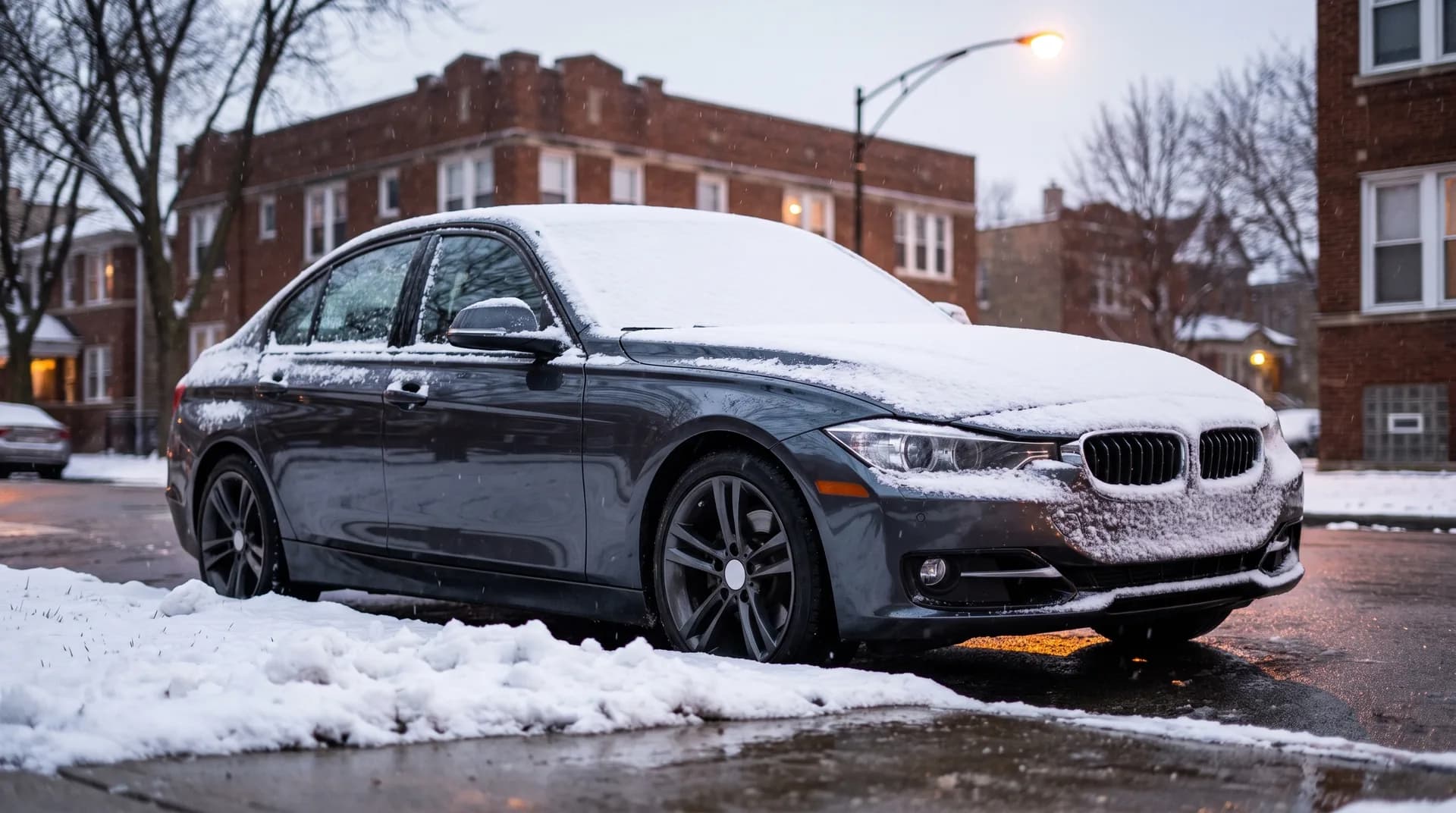
Every Chicagoan knows the feeling: it’s -10°F outside, the wind is howling off Lake Michigan, and you’re already late for a meeting at the Merchandise Mart. You turn the key or push the "Start" button, and instead of a roar, you get a sluggish, agonizing whirr-whirr or, even worse, a rapid-fire clicking sound.
In 2026, automotive technology has advanced significantly, but the fundamental chemistry of the lead-acid battery remains vulnerable to the laws of physics. At Carrectly Auto Care, winter is our busiest season for Mechanical services, and for good reason. Chicago’s extreme cold is a "silent killer" of batteries, often exposing weaknesses that were invisible during the mild autumn months.
The Science of Failure: Why Cold Kills Batteries
To understand why your car won't start, you have to understand the chemistry inside the black box. A car battery relies on a chemical reaction between lead plates and an electrolyte solution (sulfuric acid and water) to produce electrons.
-
Slower Chemical Reactions: As temperatures drop toward zero, chemical reactions slow down. By the time it hits 0°F, a fully charged battery has lost about 40% of its strength. If your battery was already at 70% health, the cold effectively drops its usable power to a level insufficient to crank the engine.
-
Increased Viscosity (Thicker Oil): While the battery is getting weaker, the engine is getting harder to turn. Cold temperatures cause engine oil to thicken, behaving more like molasses than lubricant. Your starter motor now requires more amperage to overcome this internal friction—exactly at the moment your battery has less to give.
-
The Parasitic Draw of 2026 Tech: Modern vehicles in 2026 are packed with "always-on" tech—GPS trackers, security sensors, and remote start receivers. These create a "parasitic draw" that slowly drains a battery overnight. In the summer, a healthy alternator recovers this easily. In a Chicago winter, this tiny drain can be the tipping point that leaves you needing a battery jump.
Is Your Battery Dying or Just Chilled?
Before you find yourself searching for a battery jumper pack in your trunk, your car usually tries to warn you. At our service center on 3069 W Grand Ave, we encourage drivers to watch for these "red flags":
- The Slow Crank: If the engine takes 3-5 seconds to fire up instead of the usual 1 second, your battery is struggling to deliver the necessary current.
- Dimming Lights: If your headlights brighten when you rev the engine or dim when you turn on the heater or seat warmers, the battery is no longer acting as an effective buffer.
- The "Check Engine" or Battery Light: In 2026, car computers are incredibly sensitive to voltage fluctuations. A weak battery can trigger a "Check Engine" light because sensors aren't receiving the steady 12.6 volts they require to function.
- Odd Smells: A "rotten egg" smell (sulfur) usually indicates that the battery is leaking or being overcharged by a faulty alternator. This is a fire hazard and requires immediate professional intervention.
Decoding the Label: Why Cold Cranking Amps (CCA) Matter
When it’s time for a battery replacement Chicago, you cannot simply buy the cheapest option off the shelf. For Illinois drivers, the most important number on the label is the CCA (Cold Cranking Amps).
What is CCA? CCA measures the number of amps a battery can deliver at 0°F for 30 seconds while maintaining at least 7.2 volts. In a climate like ours, we recommend a battery with a higher CCA rating than the factory minimum. For example, if your SUV requires 600 CCA, upgrading to an 800 CCA AGM (Absorbent Glass Mat) battery provides a crucial "safety margin" for those record-breaking cold snaps.
Professional Testing vs. "The Guessing Game"
Many people think a simple voltmeter check is enough. It’s not. A battery can show 12.6 volts (full charge) but fail instantly under the "load" of a starter motor.
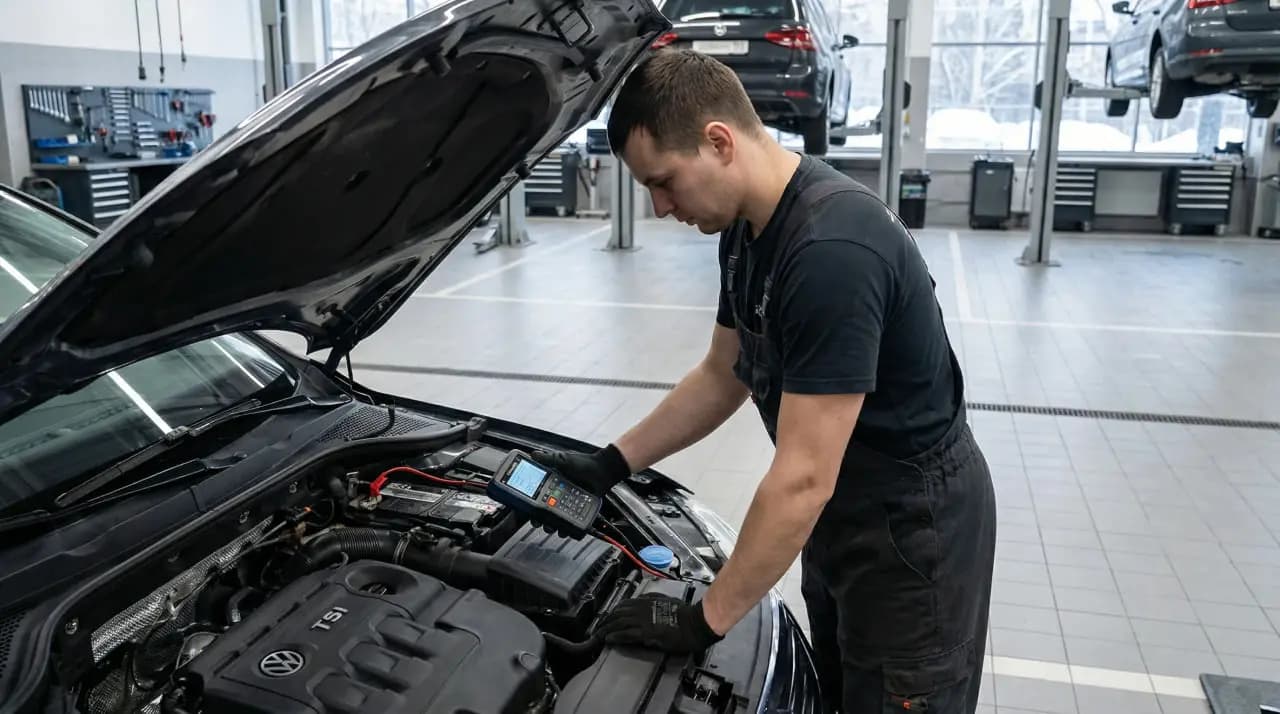
At Carrectly, we use a sophisticated battery tester that measures Internal Resistance. A battery with high internal resistance might look fine on a voltmeter, but it cannot move its energy fast enough to start an engine. Our diagnostic process also includes:
- Alternator Output Test: To ensure your car is actually recharging the battery while you drive.
- Parasitic Draw Test: To find out if a faulty module is "stealing" power overnight.
- Terminal Corrosion Cleaning: Often, a "dead" battery is just a bad connection caused by Chicago road salt.
The Carrectly Solution: Concierge Battery Service
The last thing you want to do when your car is dead is wait two hours for a tow truck or stand in a freezing garage trying to figure out a battery jump. Carrectly was founded on the principle of "innovation, simplicity, and unmatched convenience."
How we handle your battery emergency:
- On-Site Jump Start & Testing: If you’re stuck, we can dispatch a technician to provide a safe battery jump and run a quick diagnostic.
- Concierge Pickup: If the issue is more complex, our insured concierge team will pick up your vehicle and bring it to our Grand Ave hub.
- Expert Replacement: We source premium batteries (including AGM and Lithium-ion for modern hybrids/EVs) that are specifically suited for the Chicago climate.
- Electronic Registration: Most cars made after 2018 require the new battery to be "registered" with the car's computer. We handle the coding so your alternator doesn't overcharge and ruin your brand-new battery.
Prevention: How to Extend Battery Life in 2026
- Keep it Charged: If you work from home and don't drive daily, the battery never gets a full charge. A 30-minute drive once a week is a lifesaver.
- Check the Terminals: Keep them free of white, powdery corrosion.
- Unplug Accessories: Don't leave dashcams or phone chargers plugged into "always-on" ports.
- car battery
- battery test, swap, replace
- mechanical
- mechanical repair